



5 Keys to Compliance Your Cell Therapy Lab Can’t Ignore
When a single dose of CAR-T cell therapy can cost more than half a million dollars, the loss of even one batch can devastate a hospital’s bottom line.
Unlike chemically-based medications, which can lose potency as a consequence of a temperature excursion, slight temperature fluctuations can destroy these delicate therapies, making strict, continuous monitoring and documentation an absolute necessity.
Compared to other monitoring systems, cloud-based temperature monitoring platforms offer several advantages when it comes to meeting the stringent compliance and data integrity requirements for cell therapies from the U.S. Food and Drug Administration.

“This technology is a game-changer for these labs,” said Mark Solak, Director of Compliance for Dickson. “It delivers rapid alerts to the right staff and offers remote access from any device. This makes it easier to catch issues before they escalate, and the time-stamped data logs create a tamper-proof record for internal reviews and regulatory inspections.”
To fully realize these benefits and ensure compliance, cell therapy labs should follow these key steps:
Step 1: Understand Your Compliance Landscape
Clearly define all relevant regulations and standard operating procedures to maintain accreditation from organizations like the Foundation for the Accreditation of Cellular Therapy and the College of American Pathologists. Be sure to incorporate guidelines and best practices recommended by the International Society for Cell & Gene Therapy (ISCT), which advocates for the use of advanced technology to enhance monitoring and compliance, such as those with real-time IoT devices and electronic time stamps.
Develop a detailed checklist of all required environmental parameters, including temperature, humidity, and CO2 levels for cell culture incubators and any other relevant factors specific to cell viability, along with their acceptable ranges.
Proactively identify potential risk areas within your workflows, such as media storage, cell culture processes, and cryopreservation. Pinpoint any existing compliance gaps to focus your monitoring efforts effectively.
Step 2: Select the Right Monitoring System for Your Needs
Not all monitoring systems are the same. To support labs working with different cell types and therapies with unique temperature requirements for storage, processing and transport, look for a solution that includes features like:
24/7 monitoring accessible from any computer, tablet, or smartphone via a user-friendly app.
Easy to navigate interface, offering flexible data views, and customizable dashboards specifically designed to visualize critical cell culture parameters and cryostorage conditions.
Intuitive alarm configurations tailored to the sensitivity of cell therapies.
Real-time alerts customizable, shift-based notifications, that ensure the right person is notified at the right time, helping to prevent loss around the clock.
The ability to schedule reports on demand to expedite compliance checks during internal and external audits.
Seamless scalability that allows you to add monitoring to new freezers, incubators or entire lab spaces and facilities without a complete overhaul or significant IT resources.
Step 3: Ensure Your Temperature Sensors Are Set Up and Calibrated Correctly
Strategic temperature sensor placement is critical for comprehensive coverage in cell therapy labs. This includes diligently monitoring:
Ultra-low temperature freezers for cryopreserved cells, maintaining the extreme cold essential for long-term viability.
Controlled-rate freezers during the crucial cooling process to prevent cellular damage.
Refrigerators for the storage of temperature-sensitive media and reagents.
CO2 incubators that provide precise temperature and atmospheric conditions for cell culture.
To ensure accurate and reliable monitoring, temperature mapping is essential to identify optimal sensor locations and variations within each unit. You also need to consistently calibrate your temperature sensors to make sure you get accurate data.
Step 4: Manage and Report Your Data Consistently
Secure and auditable data logging is crucial for cell therapy production compliance. Your chosen system should:
Automatically record data with timestamps and user activity logs for a comprehensive environmental history.
Implement best practices for generating compliance reports linked to specific cell therapy batches. These reports should align with the data integrity and traceability principles emphasized by both regulatory bodies and organizations like the ISCT.
Offer secure data storage with robust audit trails for regulatory inspections and chain of custody.
Cloud-based solutions, such as DicksonOne, simplify this process by centralizing all data in one easily accessible platform, making it easier to respond quickly to audit requests.
Step 5: Train Your Team and Monitor Continuously
Even the most advanced monitoring system necessitates well-trained personnel for optimal operation and compliance. Making sure your system runs smoothly — and stays compliant — comes down to:
Robust training tailored to cell therapy lab staff, ensuring proficiency in system use and understanding of relevant compliance procedures unique to cell therapy handling and storage. This training should also cover temperature monitoring requirements and ISCT guidance to ensure adherence to international best practices.
Clear Standard Operating Procedures (SOPs) for all aspects of environmental monitoring within the cell therapy lab that includes defined alarm thresholds, responsible personnel, investigation procedures and impact assessments.
Regular system checks and preventative maintenance to guarantee continuous, reliable operation, safeguarding the substantial investment and critical patient impact of cell therapies.
Cloud-based environmental monitoring plays a key role for cell therapy labs striving for CAP and CLIA accreditation. These platforms alleviate many of the common pain points in cell therapy production — from managing sensitive environmental shifts to handling personalized, small-batch workflows. By simplifying compliance, improving efficiency, and enhancing overall quality, these systems provide you with invaluable peace of mind.
Additional Resources
For more information, download the free in-depth resource “The Hospital Guide to Cloud-Based Temperature Monitoring.” If you have any questions about environmental monitoring in your cell therapy lab or hospital, contact our team and we’ll quickly respond with the answers you need.
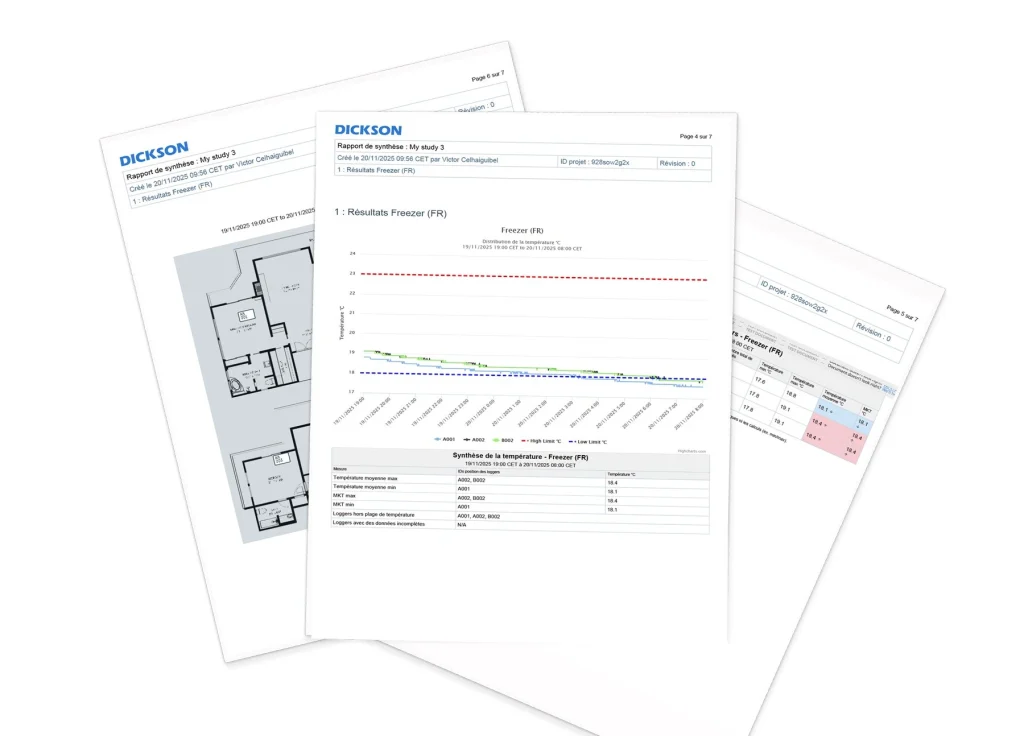
How to Place Data Loggers for Mapping Studies and 3 Ways Dickson Can Help
When it comes to temperature mapping, these two questions create the most confusion: how many loggers do I need, and where exactly should they go?…
How Compounding Pharmacies Can Build a Defensible Differential Pressure Monitoring Program
For years, differential pressure sat in the background of compounding pharmacy monitoring programs — tracked less consistently than temperature and humidity, and enforced less rigorously….

What to Look for in a GxP Metrology Partner for Pharmaceutical Manufacturing
In pharmaceutical manufacturing, there are moments that reveal whether your monitoring vendor is also a true GxP metrology partner. A temperature sensor found out of…

4 Features That Set the Cobalt X Data Logger Apart in Multi-Environment Facility Monitoring
Regulated facilities aren’t simple environments. A single floor might contain ultra-low temperature freezers, CO₂ incubators, a cleanroom, and a cold storage room with different temperature…
Ready to chat?
Talk To A Specialist
Our trained team of professionals is ready to help you through the compliance process from start to finish. Reach out today to start the conversation. Call (630) 563-4209 or send us a message.