



The safe transportation of temperature-sensitive pharmaceuticals is critical in maintaining product integrity and ensuring patient safety. WHO Annex 9 provides essential guidelines for temperature-controlled transport, emphasizing best practices for handling, storing, and distributing pharmaceuticals under GxP Pharma standards.

Importance of Temperature-Controlled Transport
Pharmaceuticals, especially vaccines, biologics, and certain medications, require strict transit temperature and humidity control to remain effective. Whether it’s the financial cost or the human cost of these critical assets, there’s a lot at stake in keeping them in the proper temperature range during transport.
Cold chain for pharma logistics ensures that products stay within the required temperature range throughout storage and transport. WHO Annex 9 mandates continuous temperature monitoring using validated sensors and data loggers to detect fluctuations that could compromise product quality.
Role of Temperature Sensors and Data Loggers
Pharmaceutical transport and cold storage lead to unpredictable and uncontrolled environments. The right temperature monitoring system can be the difference between a compliance breech and keeping the line moving smoothly.
To comply with WHO Annex 9, companies must implement temperature and humidity monitoring throughout the transportation process.
Temperature sensors provide real-time data on environmental conditions, while data loggers record and store this information for compliance reporting.
These devices help logistics teams quickly identify and address temperature excursions, ensuring pharmaceutical products remain stable and effective.
For supply chain leaders, leveraging advanced temperature monitoring technology enhances regulatory compliance, reduces product loss, and improves audit readiness. Investing in reliable temperature sensors and data loggers ensures seamless visibility, automated alerts, and data-driven decision-making for GDP-compliant pharmaceutical distribution.
Key compliance steps include:
- Using validated temperature sensors and humidity monitoring devices in all transport vehicles.
- Setting up temperature alarms and humidity alarms to detect and respond to deviations.
- Conducting regular calibration of temperature control devices and calibration of humidity control devices to maintain accuracy.
For example, Dickson’s temperature sensors and data loggers provide real-time alerts and notifications for excursions to help your staff respond immediately, including when managing a pharmaceutical temperature-controlled transport.
And Dickson’s experts also offer calibration services to ensure you’re in compliance with GDP recommendations.
Good Distribution Practices (GDP) and GxP Pharma Compliance
WHO Annex 9 aligns with Good Distribution Practices (GDP) to ensure the safe transport of pharmaceuticals. This includes:
- Pre-qualified cold chain systems for shipping temperature-sensitive products.
- Risk assessments to identify potential temperature excursion points.
- Standard Operating Procedures (SOPs) for emergency response in case of transit failures.
By following WHO Annex 9 guidelines and leveraging advanced temperature-controlled transport solutions, logistics professionals can ensure pharmaceutical products are delivered safely and effectively. Investing in data loggers, temperature sensors, and validated transport systems is key to maintaining compliance and product integrity.
Looking for More Resources?
Our Pharmaceutical Handbook explores the challenges and trends impacting pharmaceutical manufacturing, reviews core regulations, and discusses how monitoring can help your company address compliance challenges, stay audit-ready and protect end users.
If you’re interested in learning more, access this handy free guide here or contact a Dickson expert with any questions.
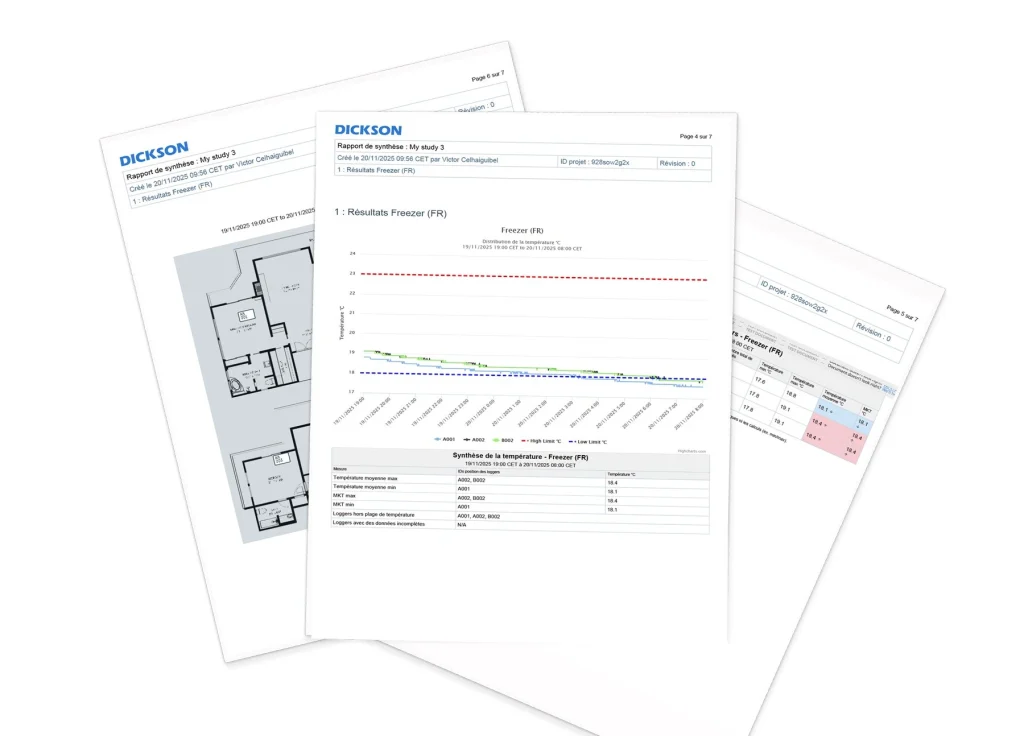
How to Place Data Loggers for Mapping Studies and 3 Ways Dickson Can Help
When it comes to temperature mapping, these two questions create the most confusion: how many loggers do I need, and where exactly should they go?…
How Compounding Pharmacies Can Build a Defensible Differential Pressure Monitoring Program
For years, differential pressure sat in the background of compounding pharmacy monitoring programs — tracked less consistently than temperature and humidity, and enforced less rigorously….

What to Look for in a GxP Metrology Partner for Pharmaceutical Manufacturing
In pharmaceutical manufacturing, there are moments that reveal whether your monitoring vendor is also a true GxP metrology partner. A temperature sensor found out of…

4 Features That Set the Cobalt X Data Logger Apart in Multi-Environment Facility Monitoring
Regulated facilities aren’t simple environments. A single floor might contain ultra-low temperature freezers, CO₂ incubators, a cleanroom, and a cold storage room with different temperature…
Ready to chat?
Talk To A Specialist
Our trained team of professionals is ready to help you through the compliance process from start to finish. Reach out today to start the conversation. Call (630) 563-4209 or send us a message.