



Your humidity monitoring system recorded a spike. The storage unit returned to normal. But your humidity sensor is still reporting elevated levels. This lingering data discrepancy, which is a compliance risk that’s incredibly difficult to explain during an audit, is called sensor saturation.
Why does sensor saturation happen? When a sensor is exposed to near 100% relative humidity or direct liquid contact, the internal sensor element absorbs more moisture than it can process. This causes the device to over-report readings with recovery times ranging from several minutes to several hours.

Why Does Humidity Go Out of Range in Cold Storage?
Humidity excursions inside refrigerators, freezers, and incubators are predictable byproducts of normal operations:
- Door openings flood the unit with warm, moisture-laden air
- Defrost cycles briefly warm interior coils and release moisture
- Overcrowding restricts airflow
- Aging gaskets or thermostats allow humidity to drift unchecked
The products stored in these environments are highly sensitive to these conditions. Elevated or fluctuating humidity rarely causes visible damage, which makes it particularly dangerous.
Vaccines and biologics can lose potency without any outward sign of degradation.
Medications and oral pharmaceuticals are susceptible to moisture-driven hydrolysis, which reduces their efficacy.
Reagents and lab chemicals are often hygroscopic, meaning humidity exposure can compromise test accuracy without any visible indicator.
Patient samples and diagnostic kits depend on stable storage conditions to remain viable and reliable.
What Causes a Sensor to Remain Out of Range After Conditions Recover?
Most temperature and humidity sensors use a capacitive thin-film polymer element that changes electrical capacitance in response to absorbed moisture. When exposed to a humidity spike, that polymer absorbs water faster than it releases it. Your refrigeration unit may correct conditions within minutes, but your sensor may still read 85% RH when the unit is actually at 55% RH.
Recovery time depends on sensor design, airflow around the device, exposure duration, and ambient temperature. Sensors installed in low-airflow locations, such as near walls or inside closed enclosures, consistently take longer to recover.
Sensor placement matters as much as sensor quality.
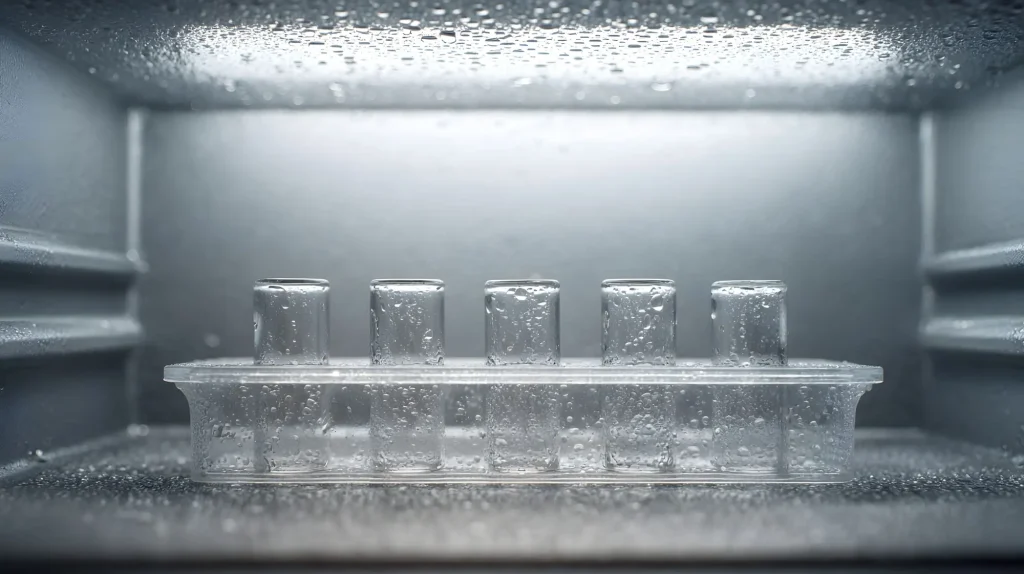
How Dickson Addresses Saturation and Drift
Dickson’s data loggers and environmental monitoring systems measure and record humidity. They do not control it. Your refrigeration equipment, HVAC system, or dehumidification units handle control. Dickson gives you documented evidence of what’s actually happening inside those environments so your team can intervene quickly, protect critical assets, and stay audit-ready.
The Reality of Condensation and Sensor Placement
Dickson’s capacitive temperature and humidity sensors, like the RTRH, are built for the precision that regulated environments demand. However, these sensors are designed specifically for non-condensing environments.
Built-in features ensure measurement accuracy under normal operating conditions, but if condensation occurs, that accuracy is compromised and can no longer be guaranteed. Preventing this depends solely on the sensor’s operating conditions and its location in the space. For example, a sensor installed near a cold wall or in an area with poor air circulation will have a significantly higher risk of condensation.
Recovering from Condensation Events
Because a sensor’s accuracy is compromised after severe condensation, recovering quickly is critical. This is where Dickson’s Replaceable Sensor technology steps in to protect your compliance records:
On-board calibration data: Each Replaceable Sensor stores calibration data directly on the sensor element itself, not the housing. That means accuracy travels with the element, and swapping in a fresh sensor never introduces a gap in your compliance records.
Zero-downtime recalibration: When a sensor element shows signs of drift after repeated saturation events, you swap in a pre-calibrated replacement without taking your monitoring point offline. Your device stays in place. Your records stay uninterrupted.
Choosing the Right Sensor for Your Environment
To prevent sensor damage and capture accurate data, you must match the sensor technology to the specific environment:
Ambient Spaces & Walk-In Coolers: For ambient spaces (warehouses, lab rooms, cleanrooms, critical storage) and walk-in coolers, the RTRH Temperature & Humidity sensor is ideal.
Refrigerators and Freezers: Because of the high condensation risk, humidity monitoring is not recommended. We recommend monitoring temperature only using the RTHM Glycol Thermistor Sensor.
Ultra-Low Freezers (-50°C and below): For extreme cold, such as -80°C storage, the highly accurate RTD Sensor is recommended, while the RKTC K-Thermocouple Sensor provides a more affordable alternative.
Combine the right sensor selection with Dickson’s ISO/IEC 17025 A2LA-accredited calibration services and a humidity mapping study to confirm optimal sensor placement, and you have a monitoring program that holds up when conditions get challenging and when auditors ask questions.Accurate data starts with the right hardware in the right location. Contact a Dickson expert to find the exact sensor configuration for your environment, and see how Dickson gives your team the real-time visibility and documentation trail that audits demand.
Frequently Asked Questions
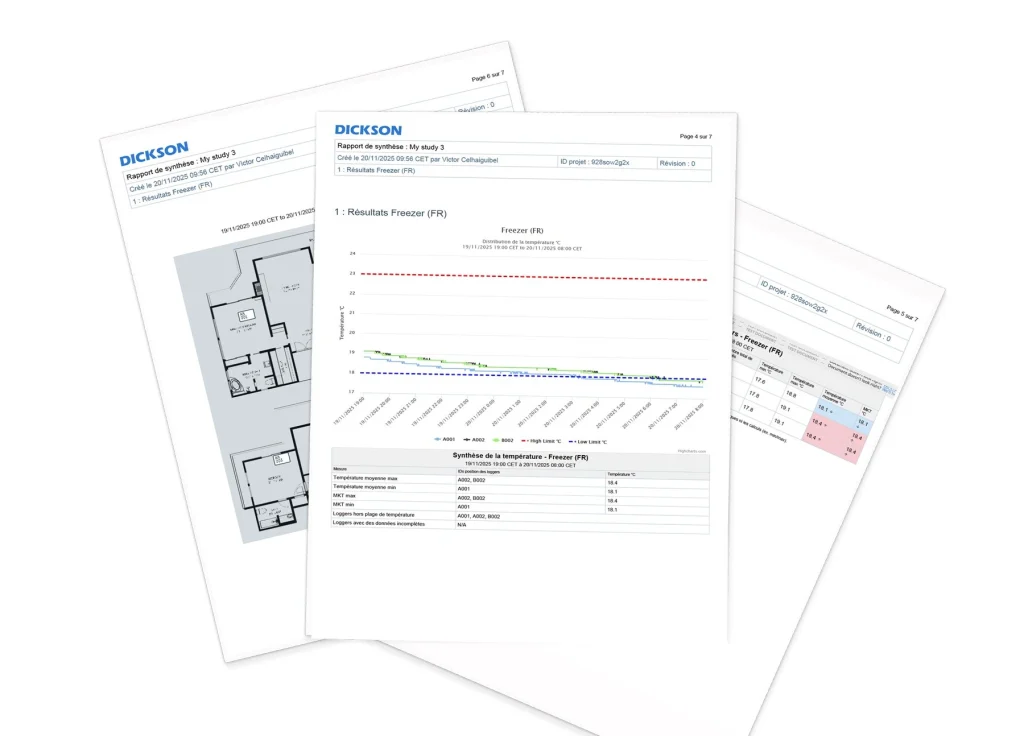
How to Place Data Loggers for Mapping Studies and 3 Ways Dickson Can Help
When it comes to temperature mapping, these two questions create the most confusion: how many loggers do I need, and where exactly should they go?…
How Compounding Pharmacies Can Build a Defensible Differential Pressure Monitoring Program
For years, differential pressure sat in the background of compounding pharmacy monitoring programs — tracked less consistently than temperature and humidity, and enforced less rigorously….

What to Look for in a GxP Metrology Partner for Pharmaceutical Manufacturing
In pharmaceutical manufacturing, there are moments that reveal whether your monitoring vendor is also a true GxP metrology partner. A temperature sensor found out of…

4 Features That Set the Cobalt X Data Logger Apart in Multi-Environment Facility Monitoring
Regulated facilities aren’t simple environments. A single floor might contain ultra-low temperature freezers, CO₂ incubators, a cleanroom, and a cold storage room with different temperature…
Ready to chat?
Talk To A Specialist
Our trained team of professionals is ready to help you through the compliance process from start to finish. Reach out today to start the conversation. Call (630) 563-4209 or send us a message.