



Your temperature and humidity sensors are doing their job every day. They log data, trigger alerts, and build the compliance record your team depends on. But all of that only holds up if the sensors are accurate.
An out-of-calibration sensor is a problem that doesn’t announce itself in GxP-regulated environments, an umbrella term covering the Good Practice quality guidelines that govern pharmaceutical manufacturing, pharmaceutical storage, cleanroom monitoring, and laboratory temperature monitoring environments.
Nothing looks wrong until a humidity excursion goes undetected and a refrigerator full of biologics, vaccines, or specialty pharmaceuticals is compromised. Or the opposite happens: a sensor over-reports and a perfectly viable, often irreplaceable, product gets discarded based on a reading that was never accurate to begin with. Either way, the human cost and financial exposure are real. The compliance exposure compounds it. Staying ahead of all three starts with knowing your sensors are calibrated and your records prove it.
What does sensor calibration actually mean? Calibration compares a sensor’s readings against a known, traceable reference standard and adjusts for any deviation. For humidity monitoring, this process verifies that your sensor’s readings reflect what’s actually happening in the environment within a defined, acceptable margin of error.

How Often Should You Calibrate Humidity Sensors?
There’s no single universal answer, but there are well-established guidelines. Annual calibration is the accepted baseline for most pharmaceutical storage and laboratory applications. Good Manufacturing Practice (GMP)-critical environments (cleanrooms, stability chambers, and incubators) often warrant semi-annual calibration or shorter intervals, depending on the risk assessment documented in your monitoring SOP.
Several factors should push your interval shorter:
High-humidity environments: Sensors in walk-in coolers and other cold storage units with frequent door openings experience more moisture exposure and are more susceptible to drift over time.
Post-excursion events: A sensor that has experienced a significant humidity spike, condensation, equipment failure, or a defrost anomaly should be verified or recalibrated before its readings are used for product disposition decisions.
Regulatory scrutiny: Facilities operating under FDA 21 CFR Part 11, College of American Pathologists (CAP) and Clinical Laboratory Improvement Amendments (CLIA) frameworks may face stricter expectations around calibration frequency and documentation. In all cases, your calibration provider should hold American Association for Laboratory Accreditation to ISO/IEC 17025.
What Environmental Factors Affect Calibration Stability?
Calibration isn’t just a scheduled event. It’s an ongoing reflection of how your sensors are being used. Conditions that accelerate drift in humidity sensors include:
- Repeated exposure to high relative humidity, which degrades the capacitive polymer sensing element over time
- Temperature fluctuations around the sensor, which affect the dielectric properties of the sensing material
- Exposure to airborne contaminants, cleaning agents, or chemical vapors common in laboratory and pharmaceutical storage settings
Temperature sensors are more stable than humidity sensors, but they aren’t immune to drift. Conditions that contribute to drift in temperature sensors include:
- Repeated thermal cycling shifts a sensor’s resistance baseline over time, especially in cold storage applications.
- Mechanical stress, shock, and vibration can alter sensing element characteristics without any visible sign of damage.
- Moisture or chemical ingress introduces measurement error when probe housing seals degrade over time.
- Operating outside the rated range accelerates material breakdown, particularly in thermistor-based temperature probes.
Understanding these factors helps you build a calibration schedule based on actual risk, not just a date on a calendar.
What Documentation Does a GxP Calibration Require?
In GxP environments, calibration is only as good as its data trail. A compliant calibration record should include:
- The sensor’s “as-found” reading before adjustment
- National Institute of Standards (NIST) or International Organization for Standardization/International Electrotechnical Commission (ISO/IEC) 17025 calibration reference standards, including traceability documentation
- The “as-left” reading after calibration
- Acceptable tolerance limits and whether the sensor passed or failed
- The technician’s name, date, and signature
Traceability to NIST standards is the baseline expectation across FDA, World Health Organization, and GxP frameworks. Dickson’s ISO/IEC 17025 A2LA-accredited calibration laboratory produces certificates that meet these documentation requirements, with SOPs built around the compliance standards your auditors expect. Learn more about Dickson’s Calibration Services →
How Replaceable Sensors™ Simplify Calibration Without Downtime
One of the most practical challenges in environmental monitoring compliance is recalibrating sensors without creating gaps in your continuous monitoring record. Sending a sensor out for calibration means either accepting a monitoring gap or deploying a spare, then having to manage the documentation for both.
Dickson’s Replaceable Sensors™ eliminate that problem. Each sensor element stores calibration data on-board, and pre-calibrated replacements are available to swap in directly. Your monitoring device stays in place, your data logger stays online, and your compliance record stays unbroken.
While swapping a new sensor keeps your active monitoring uninterrupted, strict GxP compliance requires you to validate your historical data. The swapped-out sensor (your previous, or n-1 sensor) must still undergo a post-calibration verification to capture its “as-found” reading.
This critical drift check proves the old sensor remained within acceptable tolerances during its entire deployment. While this post-calibration testing entails a necessary metrology cost, the Smart-Sensor swap method ensures you never experience a dangerous gap in your live monitoring while that older sensor is being tested.
Stay Audit-Ready with Dickson’s Calibration Experts
Calibration gaps don’t wait for a convenient time to surface. For over 90 years, Dickson has helped pharmaceutical teams, healthcare facilities, and regulated laboratories stay ahead of calibration requirements across CAP, CLIA, and GxP frameworks.
Contact a Dickson expert to assess your current humidity sensor and temperature sensor calibration program and confirm your monitoring network is accurate, documented, and ready for whatever your next audit brings.
Explore Calibration Services →
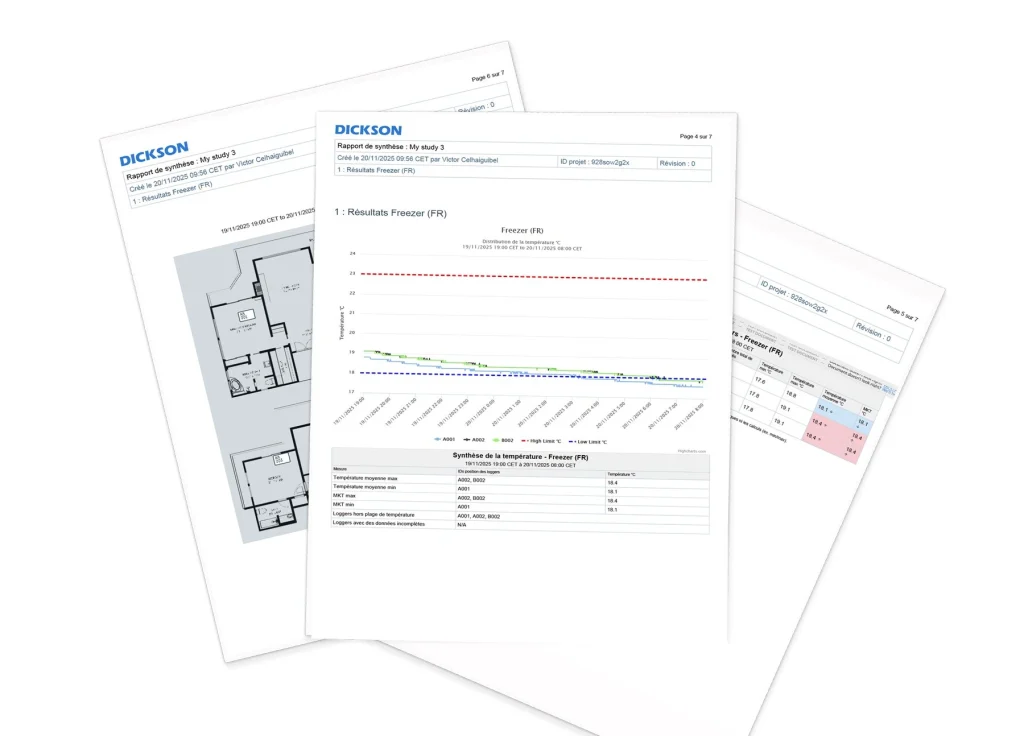
How to Place Data Loggers for Mapping Studies and 3 Ways Dickson Can Help
When it comes to temperature mapping, these two questions create the most confusion: how many loggers do I need, and where exactly should they go?…
How Compounding Pharmacies Can Build a Defensible Differential Pressure Monitoring Program
For years, differential pressure sat in the background of compounding pharmacy monitoring programs — tracked less consistently than temperature and humidity, and enforced less rigorously….

What to Look for in a GxP Metrology Partner for Pharmaceutical Manufacturing
In pharmaceutical manufacturing, there are moments that reveal whether your monitoring vendor is also a true GxP metrology partner. A temperature sensor found out of…

4 Features That Set the Cobalt X Data Logger Apart in Multi-Environment Facility Monitoring
Regulated facilities aren’t simple environments. A single floor might contain ultra-low temperature freezers, CO₂ incubators, a cleanroom, and a cold storage room with different temperature…
Ready to chat?
Talk To A Specialist
Our trained team of professionals is ready to help you through the compliance process from start to finish. Reach out today to start the conversation. Call (630) 563-4209 or send us a message.