



A winter mapping study gives facility managers for pharmaceutical storage control at warehouses, cold chain distribution centers, and clinical storage facilities valuable data, but only half the picture. The environmental conditions your facility faces in summer look nothing like winter, and compliance requires documentation for both.
Your HVAC system works differently when it’s hot and humid outside than when it’s dry and cold. When temperatures are at their highest, it runs harder and cycles more frequently to maintain uniform airflow across your facility. That shift creates hot spots that don’t exist in winter data, and regulatory auditors know to look for them.
Best practices and regulatory guidance require temperature mapping under both winter and summer seasonal extremes to confirm that your facility’s systems can maintain required conditions when they’re under the most stress.
[For more information on how to run a faster, more accurate mapping study, view our Smarter Thermal Mapping Webinar here.]

Why Skipping Summer Mapping Creates a Compliance Blind Spot
Regulatory bodies don’t accept year-round compliance claims built on single-season data. If your mapping study was conducted in winter, it tells auditors nothing about how your facility performs when ambient temperatures peak.
Two assumptions put facilities at risk every summer:
- Assuming your sensors are still in the right place.
Air circulation patterns change when outdoor temperatures climb. The spots where your temperature and humidity sensors are mounted may no longer represent the true thermal extremes of the space. Hot spots migrate, and your fixed sensors may be missing them entirely.
- Assuming your refrigeration systems are unaffected.
Walk-in coolers and freezers work significantly harder when ambient temperatures rise. Compressors that ran efficiently in March may cycle irregularly in August, creating instability inside the very storage units protecting your most temperature-sensitive inventory.
5 Zones That Demand Attention Before Summer Peaks
Strategic sensor placement during a summer warehouse mapping study requires knowing where heat accumulates. These five zones carry the highest thermal risk.
Zone 1: Loading Docks and Entry Points
Every door opening in summer brings a wave of hot, humid air into the facility. These entry points experience the most dramatic temperature swings, which is why temperature sensors and humidity sensors in high traffic receiving areas require seasonal reposition and often represent the highest-risk zones during warm months.
Zone 2: Near HVAC Vents and Air Handlers
Cooling systems under strain deliver uneven airflow. Areas closest to discharge vents may be overcooled while zones farther away heat up. Products stored near struggling air handlers are at risk from both extremes.
Zone 3: Exterior Walls, Rooflines, and Corners
Solar heat gain through poorly insulated walls and roofs raises temperatures in perimeter areas well above the facility’s average. Cold chain temperature monitoring is especially critical here because cold chain storage positioned against exterior walls may be exposed to heat that the rest of your facility never sees.
Zone 4: High-Rack Vertical Storage
Thermal stratification (the tendency of heat to rise) is amplified in summer. Floor-level conditions may appear stable, while upper-rack positions significantly exceed safe storage limits. Products stored at height are the ones most likely to experience silent excursions.
Zone 5: Walk-In Coolers and Refrigerators
High ambient temperatures force refrigeration compressors to work harder to maintain setpoints. This stress can cause compressors to run continuously, cycle irregularly, or fail to recover quickly after door openings, threatening the stability of pharmaceuticals, biologics, and vaccines inside.
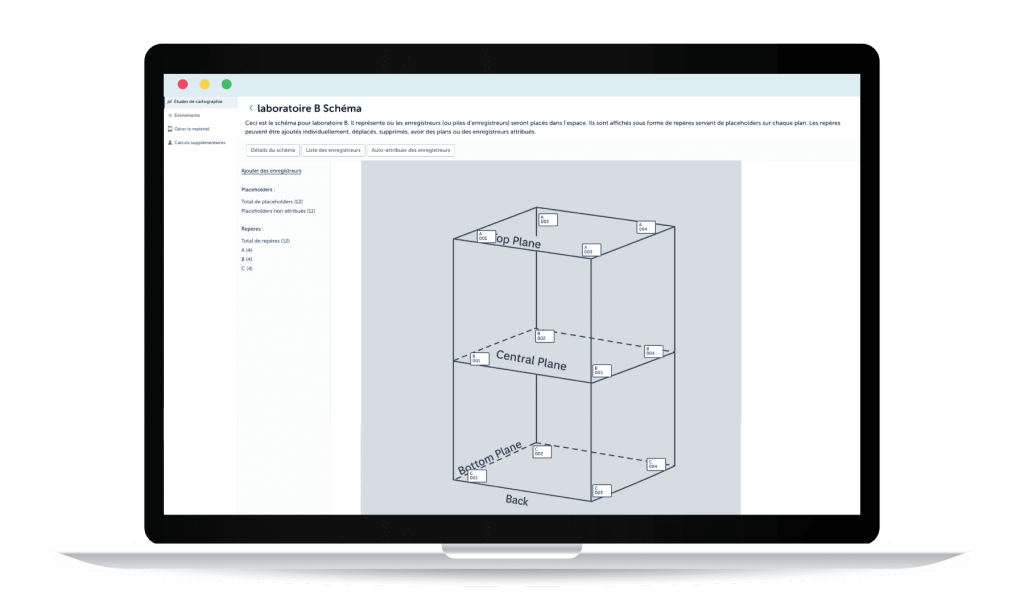
Make Summer Mapping Manageable
Summer temperature and humidity mapping doesn’t have to be a resource drain. The Dickson Mapping Suite automates four important steps that typically slow a seasonal study down:
- Configuring and Deploying Equipment Before Every Study: Mapping Suite ships as a pre-equipped kit, including calibrated temperature sensors, gateways, and software. There’s no sourcing, staging, or manual configuration before the study starts.
- Physically Monitoring Conditions Throughout the Study: Mapping Suite streams conditions in real time to any device, so your team catches deviations as they happen without being in the room.
- Manually Compiling and Formatting Compliance Reports: When the study ends, the report is already built — audit-ready, time-stamped, and compliant with FDA 21 CFR Part 11, EU Annex 11, and ALCOA data integrity standards.
- Recreating the Same Workflow from Scratch Each Season: Every study runs through one centralized interface with the same setup, the same process, and the same documentation standard — regardless of location or season.
Summer mapping studies need to run while temperatures are actually peaking, which means the time to plan is now.
Contact Dickson to learn more about Mapping Suite or schedule a demo before peak temperatures arrive.
Additional Resources:
Avoiding 7 Common Mistakes in Temperature and Humidity Mapping Projects
The Cold Hard Fact: Seasonal Changes Require Seasonal Mapping
The Temperature Mapping Duration Debate: How Long Is Long Enough?
How Compounding Pharmacies Can Build a Defensible Differential Pressure Monitoring Program
For years, differential pressure sat in the background of compounding pharmacy monitoring programs — tracked less consistently than temperature and humidity, and enforced less rigorously….

What to Look for in a GxP Metrology Partner for Pharmaceutical Manufacturing
In pharmaceutical manufacturing, there are moments that reveal whether your monitoring vendor is also a true GxP metrology partner. A temperature sensor found out of…

4 Features That Set the Cobalt X Data Logger Apart in Multi-Environment Facility Monitoring
Regulated facilities aren’t simple environments. A single floor might contain ultra-low temperature freezers, CO₂ incubators, a cleanroom, and a cold storage room with different temperature…

Why Continuous Differential Pressure Monitoring Is Critical in Pharmaceutical Cleanrooms
A pharmaceutical cleanroom’s pressure cascade does a critical job: keeping air and everything carried in it moving away from your most sensitive areas. Continuous environmental…
Ready to chat?
Talk To A Specialist
Our trained team of professionals is ready to help you through the compliance process from start to finish. Reach out today to start the conversation. Call (630) 563-4209 or send us a message.