



When most of us think of space missions, we picture the scenes and images portrayed in thrilling Hollywood movies such as “The Martian,” “Interstellar,” or “Life.” It all seems so exciting, scary, and incredibly fascinating. But then again, have you ever stopped to think about what life is really like while up in space? Better yet, have you ever stopped to think about what happens when an astronaut gets sick or hurt in space? Adam Rodgers of Wired gives us some insight.
Within decades of space travel, luckily, no astronaut has ever had a major injury or needed surgery in space. However, if humans ever venture past low Earth orbit and outward toward deeper space, chances are someone is going to get hurt. Matthieu Komorowski, an aspiring astronaut and current anesthesiologist, wrote in a journal article last year, “For a crew of six on a 900-day mission to Mars, that’s pretty much one major emergency all but guaranteed.”
As you enter space and spend some time there, your body starts to change. For example, your blood vessels don’t constrict and dilate as well, your red cell mass goes down, your total blood circulation decreases, and your immune system weakens making you more susceptible to bacteria. Aside from those changes, the other most common dangers that come with space travel are radiation, muscle atrophy, decreased bone density, and psychiatric decompensation.
So what equipment is aboard the International Space Station to combat these dangers? The crew has access to a small pharmacy, an automated emergency defibrillator, IV fluids, dental equipment and other diagnostic equipment like blood pressure cuffs. For internal injuries such as internal bleeding or fluid levels, the space station crew also carries an ultrasound device.
But who knows how to use all of this stuff? Is there a doctor on board the space station? The answer is no. However, the astronauts learn basic medical procedures as part of their pre-expedition training. Examples of the training include inserting a chest tube, administering fluids, etc. Some even spend time assisting in emergency rooms to get some first-hand experience. In spite of this training, nothing compares to the actual challenge of medical care in space. Among other challenging factors, blood can splatter and pool even more than usual due to the lack of gravity and IV’s require a pump to keep bubbles from floating to the top of the solution.
Although there usually isn’t a doctor on board, there is an on call surgeon on the ground. Engineer and retired NASA astronaut, Steve Swanson recalls, “There are a few things we train to handle right away. Anything besides that, we were going to be calling the ground.” The surgeon can help guide the crew through a procedure or help determine if he or she needs to come home via a Soyuz for immediate medical attention.
The decision to come home is a big deal. That kind of decision goes all the way to the flight director and head of NASA. It’s because there could potentially be a lot of complications concerning the Soyuz and the patient’s injury. Swanson explains, “If someone breaks a leg, how would you get them in a pressure suit?” The Soyuz capsule is a cramped fit. “They’re really bent up in there. If the patient is intubated, on a ventilator with oxygen tanks, they won’t fit into the Soyuz at all, much less into a pressure suit.”
NASA is currently sponsoring research to discover a way to solve these complications. For now, it is at least comforting to know that astronauts are prepared and trained to handle medical emergencies to keep each other safe.
Dickson has a variety of continuous monitoring products to meet your needs. Whether you’re tracking the stability of a vaccine, the accuracy of an oven or the stability of a chamber, Dickson has a solution for you.
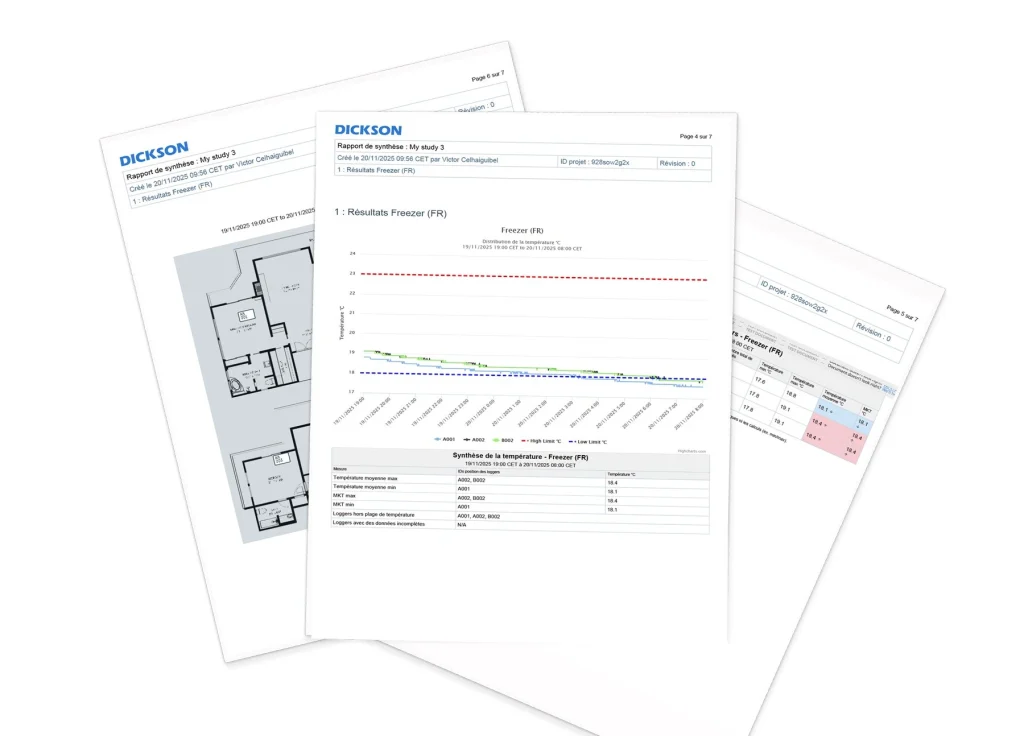
How to Place Data Loggers for Mapping Studies and 3 Ways Dickson Can Help
When it comes to temperature mapping, these two questions create the most confusion: how many loggers do I need, and where exactly should they go?…
How Compounding Pharmacies Can Build a Defensible Differential Pressure Monitoring Program
For years, differential pressure sat in the background of compounding pharmacy monitoring programs — tracked less consistently than temperature and humidity, and enforced less rigorously….

What to Look for in a GxP Metrology Partner for Pharmaceutical Manufacturing
In pharmaceutical manufacturing, there are moments that reveal whether your monitoring vendor is also a true GxP metrology partner. A temperature sensor found out of…

4 Features That Set the Cobalt X Data Logger Apart in Multi-Environment Facility Monitoring
Regulated facilities aren’t simple environments. A single floor might contain ultra-low temperature freezers, CO₂ incubators, a cleanroom, and a cold storage room with different temperature…
Ready to chat?
Talk To A Specialist
Our trained team of professionals is ready to help you through the compliance process from start to finish. Reach out today to start the conversation. Call (630) 563-4209 or send us a message.