



The greatest threat to your vaccine inventory might actually be the alarms designed to protect it.
When clinical teams are overwhelmed by frequent, non-critical alerts, “alarm fatigue” sets in, causing staff to tune out the very warnings meant to prevent a total loss.
The stakes of missing a true temperature excursion are massive. Beyond the devastating human cost of administering ineffective vaccines, temperature-control failures cost the global biopharma industry an estimated $34 billion annually, according to the IQVIA Institute for Human Data Science.
Reliable pharmaceutical storage control requires setting the right limits. To ensure effective vaccine temperature monitoring without overburdening your staff, you don’t need more alarms. You need smarter alarms.
Why Are Basic “Safe/Unsafe” Alarms No Longer Enough?
A basic “Safe/Unsafe” alarm only tells you something went wrong. By the time it goes off, you may have already lost inventory, compromised patient safety, and created an audit risk.
A 3-tier system that includes Warning, Action, and Emergency notifications changes that. It catches temperature drift early, routes the right alert to the right person, and reduces the false alarms that cause staff to start ignoring notifications altogether, strengthening vaccine monitoring compliance.
To set this up, look for a temperature data logger that gives you the option to configure three high and three low temperature limits per sensor. Here’s how a quality manager at a highly regulated laboratory uses this in practice:
- Limit 1: Warning at 44.6°F (7°C) (in acceptable range): Sends a warning email to staff who store samples before an excursion occurs, prompting them to check the door.
- Limit 2: Action at 48.2°F (9°C) (entering unacceptable range): Triggers e-mails, phone calls, and text messages to on-call staff to move product or initiate remote intervention.
- Limit 3: Emergency at 53.6°F (12°C) (beyond unacceptable range): Activates a wireless siren at the lab’s maintenance office, indicating there may be a refrigerator failure requiring immediate repair.
Regulators specifically require that alarm limits include both alert and action levels, set so that preventive action can be taken before a product excursion occurs, which is exactly what a 3-tier system is designed to deliver.

How Do Smart Data Logger Features Keep Operations Running Smoothly?
Most traditional temperature monitoring systems weren’t designed for the demands modern vaccine programs face. With single-threshold alarms, everything is either fine or a crisis, with nothing in between. Systems that rely entirely on Wi-Fi connectivity go dark during outages, leaving facilities with no data and no documentation for exactly the period when something may have gone wrong. And without escalation logic, the right person often isn’t notified until it’s too late to act.
DicksonOne, OCEAView and the Cobalt X are built to close these gaps. Using an advanced temperature data logger, such as the Cobalt X connected to the DicksonOne or the OCEAView™ cloud system, allows you to configure three high and three low limits per sensor.
Crucially, alarm logic is managed locally on the device. It is not dependent on network connectivity, ensuring safety even during outages. When connectivity is lost, readings continue to record on the device and queue for transmission once the connection is restored, preserving an unbroken data record with no IT intervention required.
Remote temperature monitoring through DicksonOne also means administrators aren’t dependent on on-site staff to catch early-stage excursions. From any connected device, your team can review live readings, acknowledge alerts, and verify conditions without being physically present.
Administrators can also set intelligent time delays, such as a 15-minute delay on limits, to account for routine inventory stocking without triggering unnecessary panic.
What Are the Standard Vaccine Storage Ranges?
- Refrigerated: 36°F to 46°F (2°C to 8°C)
- Frozen: -58°F to 5°F (-50°C to -15°C)
- Ultra-Low: -76°F to -112°F (-60°C to -80°C)
See the full list of CDC Vaccine Storage Requirements
Is Your Temperature Monitoring System Audit-Ready For Your Region?
United States
The 3-tier alarm strategy directly supports the Centers for Disease Control and Prevention (CDC) Vaccine Storage Toolkit and Vaccines for Children (VFC) program requirements for continuous environmental monitoring. VFC mandates that digital data loggers (DDLs) record at intervals of 30 minutes or less, though higher-risk storage environments may warrant tighter intervals of 10 to 15 minutes depending on your facility’s standard operating procedures (SOPs).
EU & France
EU Good Distribution Practice (GDP) Guidelines enforced in France by the Agence Nationale de Sécurité du Médicament et des Produits de Santé (ANSM) mandate continuous monitoring with calibrated equipment and full audit documentation. WHO Annex 9 specifies a minimum recording frequency of six times per hour (every 10 minutes) for each monitoring sensor position in refrigerators and freezers.
United Kingdom
Continuous, documented cold chain monitoring with a full audit trail also satisfies National Health Service (NHS) vaccine storage and handling policies and Medicines and Healthcare products Regulatory Agency (MHRA) standards.
Middle East
Facilities operating under Saudi Food and Drug Authority (SFDA) GDP guidelines, the dominant regulatory reference across the Gulf Cooperation Council (GCC), will find that documented continuous monitoring with a complete audit trail meets core SFDA requirements. SFDA’s GDP framework is grounded in WHO guidelines, making WHO Annex 9 monitoring standards the underlying benchmark in this region as well.
Regardless of geography, the principle is consistent: temperature data must be continuous, tamper-proof, and instantly retrievable during an audit. If an event occurs, readings are transmitted instantly via DicksonOne or OCEAView, preserving an unbroken chain of data integrity, whether your inspecting authority is the CDC, MHRA, EMA, or SFDA.
Why Dickson for Vaccine Alarm Management?
Whether you are managing a single vaccine refrigerator or monitoring storage across multiple facilities, a tiered alarm strategy is the foundation of a compliant, audit-ready operation. What sets Dickson apart is how that strategy is delivered: alarm logic that runs locally on the device regardless of network status, multi-tier escalation that routes the right alert to the right person without manual intervention, and a monitoring platform designed to minimize IT dependency while maximizing documentation integrity.
Is your current alarm setup actually configured to catch an excursion or just to notify you after one has already occurred? If you’re relying on single-threshold alerts or a system that goes quiet during an outage, there’s likely a gap in your compliance coverage.
Contact a Dickson expert to see how DicksonOne and the Cobalt X can close it.
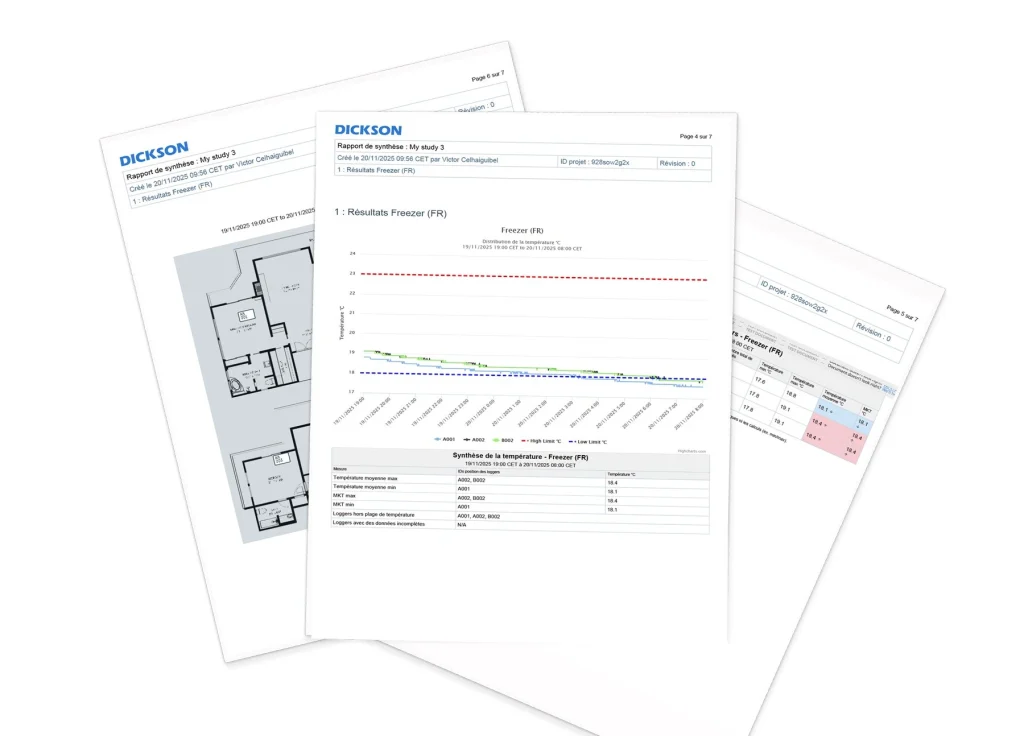
How to Place Data Loggers for Mapping Studies and 3 Ways Dickson Can Help
When it comes to temperature mapping, these two questions create the most confusion: how many loggers do I need, and where exactly should they go?…
How Compounding Pharmacies Can Build a Defensible Differential Pressure Monitoring Program
For years, differential pressure sat in the background of compounding pharmacy monitoring programs — tracked less consistently than temperature and humidity, and enforced less rigorously….
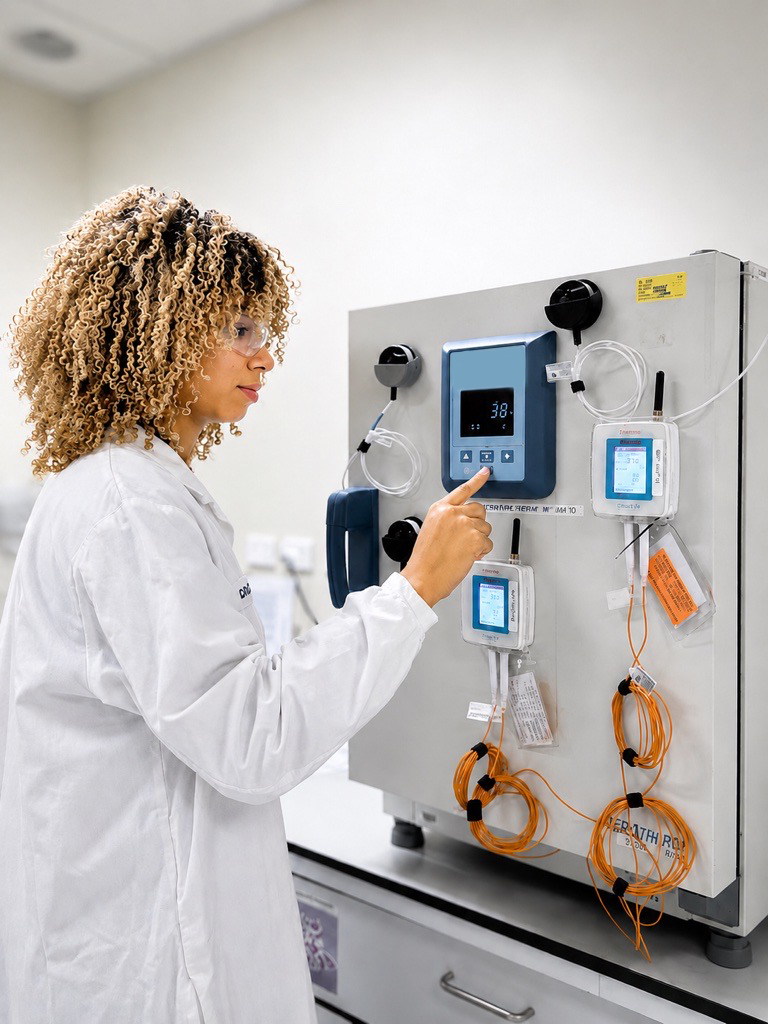
How Douglas Pharmaceuticals Strengthened Environmental Monitoring and Audit Readiness with OCEAView™
Faced with the need to modernise its environmental monitoring approach across two manufacturing sites, Douglas Pharmaceuticals turned to Dickson to deploy a compliant, centralised, and…

What to Look for in a GxP Metrology Partner for Pharmaceutical Manufacturing
In pharmaceutical manufacturing, there are moments that reveal whether your monitoring vendor is also a true GxP metrology partner. A temperature sensor found out of…
Ready to chat?
Talk To A Specialist
Our trained team of professionals is ready to help you through the compliance process from start to finish. Reach out today to start the conversation. Call +33 4 99 13 67 30 or send us a message.