



For years, differential pressure sat in the background of compounding pharmacy monitoring programs — tracked less consistently than temperature and humidity, and enforced less rigorously. Now it sits at the top of auditors’ checklists across regulated markets worldwide.
This article covers the regulatory history behind that shift, the specific pressure direction and threshold rules governing sterile and hazardous compounding environments under EU Good Manufacturing Practice (GMP) Annex 1 and related regional frameworks, and how cascade coverage across the full classified environment protects your compliance record.
Why Differential Pressure Stability Is Crucial for Compound Purity
Differential pressure control in a compounding cleanroom protects the integrity of your formulations by maintaining an invisible aerodynamic barrier. When pressure differentials fluctuate or drop, the physical direction of airflow changes, carrying severe consequences for cleanroom compliance or Biosafety Level Laboratories (BSL) compliance.
Microbial Contamination Risks
A drop in positive pressure allows unfiltered air from lower-classified spaces to rush into the buffer room, instantly introducing airborne particulates and microbial contaminants into your sterile field.
Personnel and Facility Safety Hazards
In hazardous compounding environments, a loss of negative containment pressure eliminates the barrier that prevents toxic chemical vapors or hazardous drug particles from escaping into safe staff zones.
Immediate Audit and Batch Failures
Because airflow direction is your first line of defense, a single undocumented differential pressure excursion will trigger an environmental monitoring compliance failure, forcing immediate batch quarantines and costly corrective actions.
The Outbreak That Changed Compounding Pharmacy Compliance
In 2012, the New England Compounding Center (NECC) outbreak of fungal meningitis traced to contaminated compounded spinal injections killed 64 people and exposed how badly environmental controls had failed across compounding facilities. The risks it exposed were not unique to the United States — European regulators had been independently tightening expectations around cleanroom environmental controls for years.
The 2022 revision of EU Good Manufacturing Practice (GMP) Annex 1 formalized that direction, reinforcing continuous, retrievable differential pressure documentation as a requirement across sterile manufacturing and compounding environments. The standard was established not as a facility preference or a periodic check, but as a mandated compliance obligation tied directly to patient safety.
Pressure Direction Depends on What You Compound
The required pressure direction in your compounding space is determined by what you produce. EU GMP Annex 1 governs sterile compounding environments and establishes distinct pressure requirements depending on cleanroom grade classification and the nature of what is being compounded.
| Cleanroom Grade | Environment | Pressure Direction | Threshold Guidance |
Grade A | Sterile compounding zone — critical zone where filling and compounding operations take place | Positive pressure relative to Grade B surroundings | Higher positive pressure maintained relative to all surrounding grades |
Grade B | Background environment for Grade A aseptic preparation and filling | Positive pressure relative to Grade C | Pressure cascade maintained relative to Grade C and Grade D |
Grade C | Preparation and filling of products for subsequent terminal sterilization | Positive pressure relative to Grade D | Minimum 10 Pa recommended relative to adjacent lower grade |
Grade D | Handling of starting materials, components, and products for subsequent sterile processing | Positive pressure relative to unclassified areas | Minimum 10 Pa recommended relative to unclassified space |
Hazardous Drug Compounding Area | Negative pressure containment zone for cytotoxic and hazardous drug preparation | Negative pressure relative to all adjacent spaces | Minimum 12.5 Pa negative relative to adjacent classified or unclassified areas |
Facilities that handle both non-hazardous compounded sterile preparations (CSPs) and hazardous drugs manage opposite pressure relationships simultaneously.
When an excursion occurs in either space, the environmental monitoring compliance response requires a documented record showing exactly when the deviation happened, how long it lasted, and what action was taken. When your data lives in two completely separate formats, matching them up creates tedious paperwork and opens the door for compliance gaps.
Why Anteroom Monitoring Is Key
One of the cleanroom’s most critical transitional checkpoints is the anteroom.
EU GMP Annex 1 requires documented pressure differentials between each classified space — buffer room to anteroom, and anteroom to unclassified area — as part of a facility’s contamination control strategy. Pressure thresholds are expressed in Pascals in European practice. Differential pressure is a measurement of the relationship between two spaces. A sensor covering only the buffer room does not document the cascade between the buffer room and the anteroom.
This results in three compliance blind spots that can lead to:
Contaminant Buildup
If anteroom pressure fails, airborne particles quietly pool in that transitional space, even if your main buffer room readings look perfect.
Foot Traffic Transfer
Every time staff open the door to move gowning, equipment, or materials, those trapped contaminants get swept directly into your sterile space.
Hidden Audit Risks
Because your compounding room sensor stays in range, no internal data will flag the issue until an auditor uncovers the contamination.
Monitoring every tier of the cascade proves your facility design holds up during active, real-world compounding shifts — not just during scheduled certification.

How Dickson Addresses Differential Pressure Monitoring
EU GMP Annex 1 sets specific requirements that your monitoring hardware needs to support, including:
- Calibration verification for temperature sensors, humidity sensors, and differential pressure sensors in accordance with ISO/IEC 17025 accredited standards and EU GMP Annex 11 requirements
- All data continuously captured and immediately retrievable for review without manual log reconstruction
- Continuous parameter tracking for Grade A and Grade B cleanroom environments with monitoring frequency aligned to your contamination control strategy
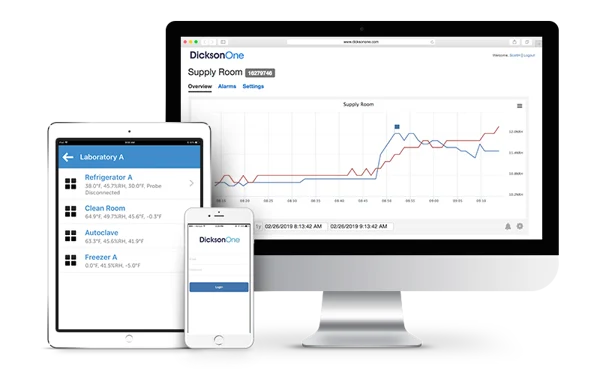
To meet these compliance requirements without creating extra administrative burden for your staff, you need a monitoring platform built specifically for heavily regulated pharmacy spaces. Dickson’s cloud-connected data loggers automate this entire process by continuously capturing your critical parameters and streaming them directly to a centralized dashboard.
Cobalt X Data Logger
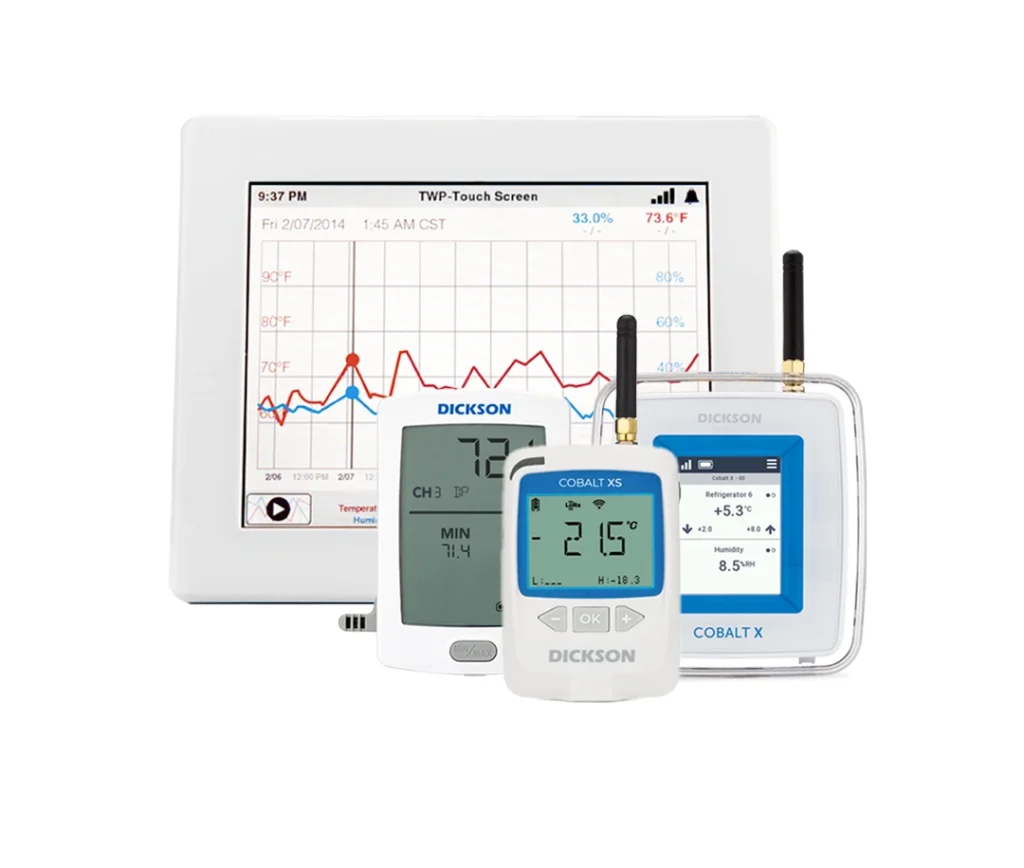
Cobalt X, Dickson’s most versatile temperature data logger and multi-parameter logger for cleanroom environments supports up to four simultaneous sensors, including temperature and humidity sensors and differential pressure Smart Sensors (-250 Pa to +250 Pa). The 4-20 mA universal input also allows integration with third-party differential pressure (DP) transducers already specified for your cleanroom. Features include a glove-compatible touchscreen for on-site alarm acknowledgment and transmission via LoRaWAN to DicksonOne or OCEAView™ Cloud or On-Premise platform.
Pressure Data Logger
Built for applications that require dedicated, standalone pressure documentation. Captures precise differential pressure readings over time with on-board memory storage, which makes it well-suited for spaces where network connectivity is limited or a separate pressure record is preferred.
Both data loggers connect to DicksonOne or the OCEAView dashboard, where buffer room, anteroom, and corridor pressure data sit alongside temperature and humidity readings in a single view with exportable compliance reports.
Explore Dickson Monitoring Solutions for Compounding Pharmacies →
Download Pharmaceutical Environmental Monitoring Handbook→
Differential Pressure Frequently Asked Questions
How Well-Designed Vaccine Monitoring Protects Patients
Every vaccine dose in a refrigerated environment, whether destined for a pediatric office, a retail pharmacy, or a public health clinic, represents a patient counting…
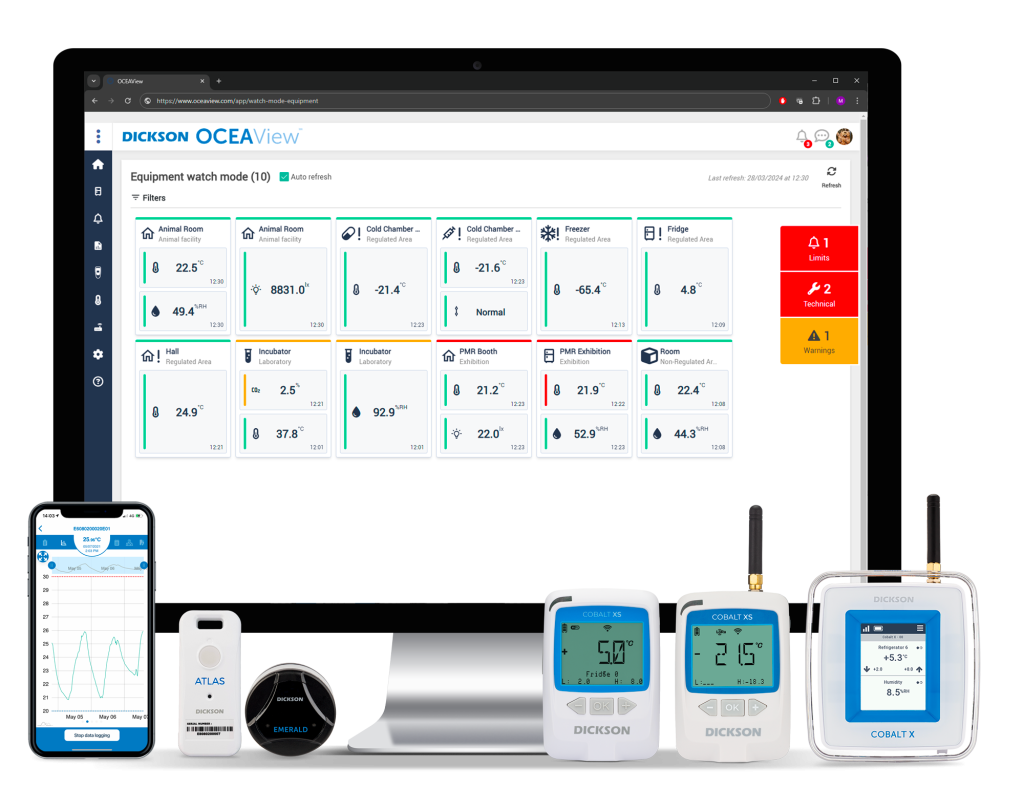
What Is OPC UA, and Why Does It Matter for Regulated Industries?
If you work anywhere near a plant floor, a cleanroom, or a hospital facilities team, you’ve probably heard the term OPC UA, usually in the…
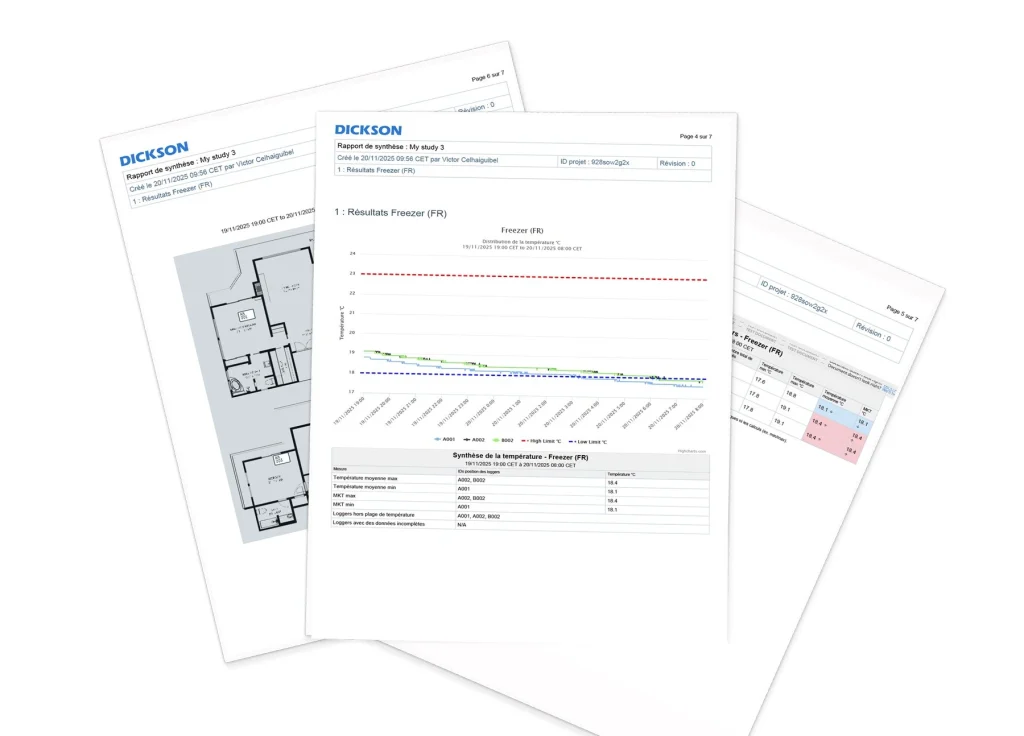
How to Place Data Loggers for Mapping Studies and 3 Ways Dickson Can Help
When it comes to temperature mapping, these two questions create the most confusion: how many loggers do I need, and where exactly should they go?…
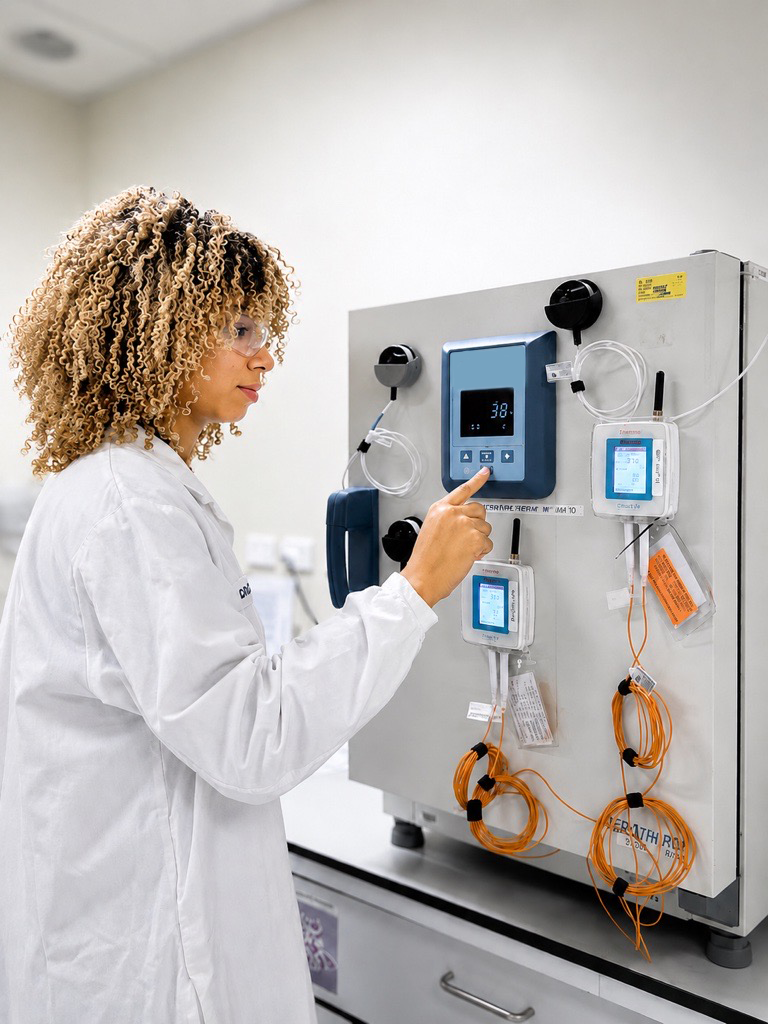
How Douglas Pharmaceuticals Strengthened Environmental Monitoring and Audit Readiness with OCEAView™
Faced with the need to modernise its environmental monitoring approach across two manufacturing sites, Douglas Pharmaceuticals turned to Dickson to deploy a compliant, centralised, and…
Ready to chat?
Talk To A Specialist
Our trained team of professionals is ready to help you through the compliance process from start to finish. Reach out today to start the conversation. Call +33 4 99 13 67 30 or send us a message.