



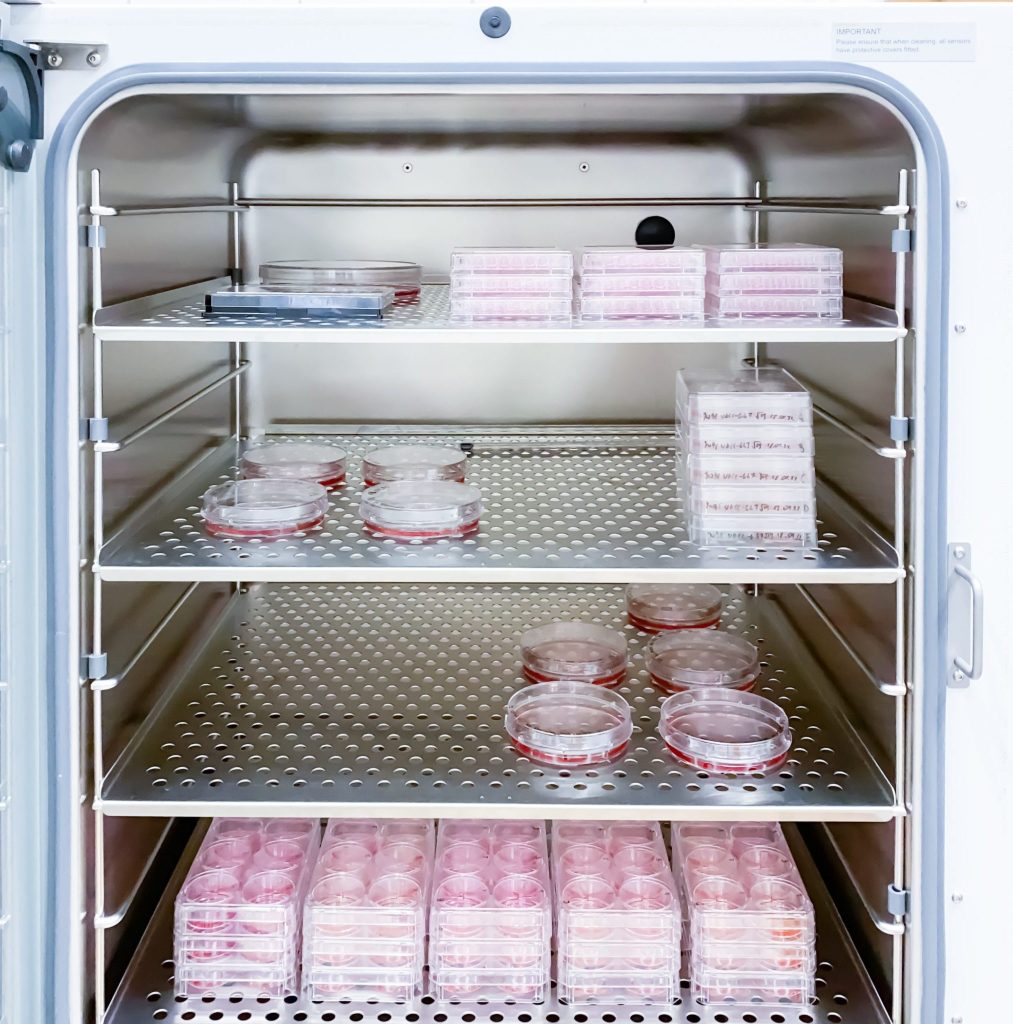
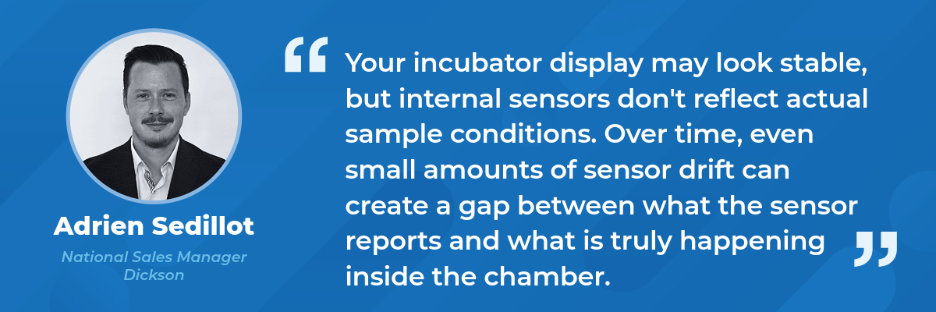
Your CO2 incubator display says everything is fine. Temperature steady. Humidity on target. CO2 holding at 5%. But that display only tells you what the incubator thinks is happening inside the chamber.
The sensor responsible for those readings has been sitting in a hot, humid environment, quietly drifting off baseline. If it drifts, the machine doesn’t know. It just keeps adjusting to a flawed baseline, logging readings that look perfectly normal.
The Physics of Humidity Sensor Failure
Most CO2 incubators measure humidity with a capacitive sensor, the most common technology across mid-range and high-end units, regardless of manufacturer. This sensor type works well under normal conditions, but two failure modes can emerge in certain high-humidity conditions:
Moisture permeation causes readings to drift gradually over time as humidity works into the sensor material.
Condensation forms directly on the sensor, causing it to fail outright in severe cases.
A drifting humidity sensor doesn’t just affect moisture levels. It can destabilize CO2 readings, shift media pH outside the narrow 7.2-7.4 window cells require, and trigger culture failure through a chain of events the display never reflects. Meanwhile, the internal log shows humidity held within the range.
Why Internal Logs Fail Root Cause Analysis
Losing a batch of embryos or cell cultures is costly enough. Losing it without knowing why is worse.
Without an independent monitoring system recording temperature, humidity, and CO2 from outside the machine’s control loop, there is no raw data record to distinguish equipment failure from protocol error.
This gap has direct consequences in clinical settings. Medical laboratories across Europe and the Middle East running microbiology cultures, IVF workflows, and pathology specimens operate under ISO 15189:2022, are required to maintain appropriate environmental conditions for sample handling, storage, and examination, with documented evidence that critical parameters remain within specified limits. These requirements include:
- Environmental condition monitoring for all temperature-dependent equipment using a calibrated device, at risk-assessed intervals
- Defined acceptable temperature and humidity ranges, documented per manufacturer instructions
- Calibration of monitoring devices traceable to national or international standards, with records
- Documented corrective action procedures and outcomes for any excursions
- Record retention throughout the period defined by the lab’s quality management system and applicable national regulations
The Case for Independent Incubator Monitoring
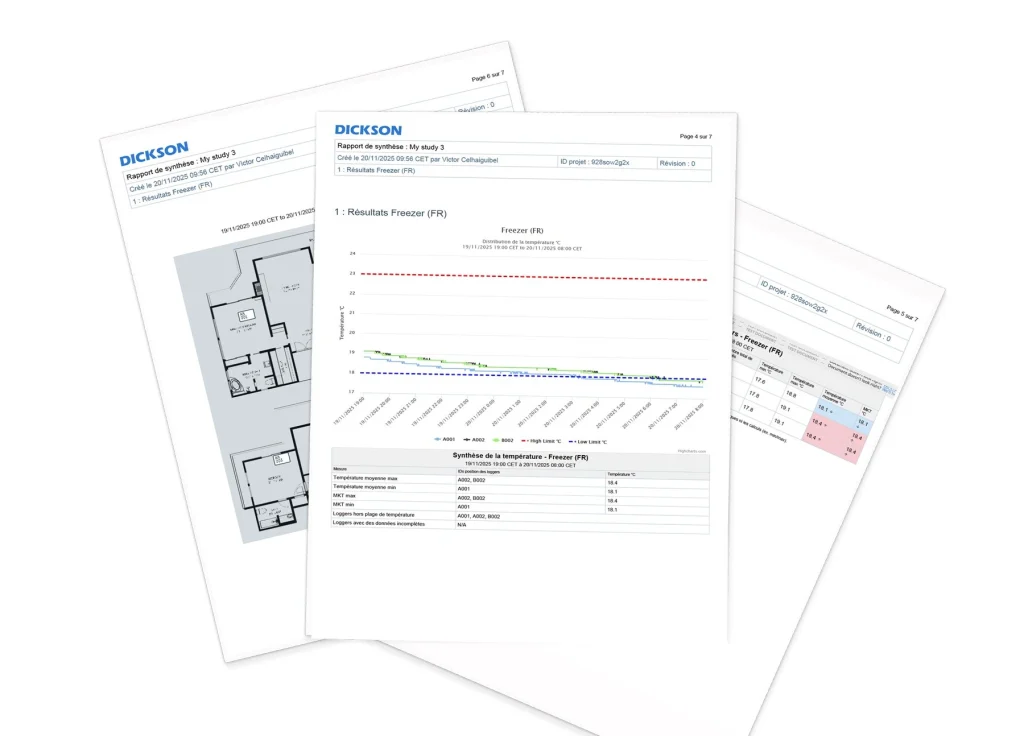
External data loggers with National Institute of Standards and Technology (NIST)-traceable calibrated temperature and humidity sensors record actual chamber conditions, not the machine’s interpretation of them. With DicksonOne, real-time alerts notify the right staff the moment conditions drift outside defined thresholds, and every reading is automatically stored in a time-stamped, audit-ready record accessible from any connected device.
Dickson’s replaceable sensor technology reframes the incubator environmental control and calibration problem entirely. Every sensor ships pre-calibrated and NIST-traceable, eliminating five common calibration headaches:
- No coordinating equipment downtime around calibration schedules
- No loaner devices
- No shipping units to a service center
- No gap in your monitoring record when recalibration is due
- No uncertainty about whether drift has crept in since the last service visit
Your incubator is a control instrument. Independent monitoring is how you validate it, just like any other critical process in the lab.
Adding an independent remote temperature monitoring solution with continuous CO2 monitoring and humidity logging doesn’t mean your incubator is unreliable. It means you’re applying the same standard of evidence to your equipment that you apply to your experiments.
Dickson has helped clinical and research laboratories meet environmental monitoring requirements for decades. Whether you’re building a new monitoring program or closing gaps in an existing one, contact a Dickson expert to see how DicksonOne makes independent incubator monitoring straightforward, compliant, and audit-ready from day one.
How to Place Data Loggers for Mapping Studies and 3 Ways Dickson Can Help
When it comes to temperature mapping, these two questions create the most confusion: how many loggers do I need, and where exactly should they go?…
How Compounding Pharmacies Can Build a Defensible Differential Pressure Monitoring Program
For years, differential pressure sat in the background of compounding pharmacy monitoring programs — tracked less consistently than temperature and humidity, and enforced less rigorously….

What to Look for in a GxP Metrology Partner for Pharmaceutical Manufacturing
In pharmaceutical manufacturing, there are moments that reveal whether your monitoring vendor is also a true GxP metrology partner. A temperature sensor found out of…

4 Features That Set the Cobalt X Data Logger Apart in Multi-Environment Facility Monitoring
Regulated facilities aren’t simple environments. A single floor might contain ultra-low temperature freezers, CO₂ incubators, a cleanroom, and a cold storage room with different temperature…
Ready to chat?
Talk To A Specialist
Our trained team of professionals is ready to help you through the compliance process from start to finish. Reach out today to start the conversation. Call (630) 563-4209 or send us a message.