



Facility managers often feel a sense of accomplishment after their initial mapping is complete. However, that data is only a snapshot. Environmental dynamics shift significantly during extreme cold events, so your summer data may no longer reflect your facility’s year-round thermal profile.
Your HVAC system works differently when it’s cold outside than in the hotter months of the year. The colder air outside forces your system to pump heat, significantly altering airflow dynamics.
Best practices and regulatory guidance recommend thermal mapping in extreme hot and cold weather conditions to ensure the facility’s environmental systems, fridges, and refrigerators can maintain temperatures within a precise range under demanding conditions.

Why You Shouldn’t Skip Cold Weather Mapping
Failing to validate your storage areas during winter cold months creates a compliance blind spot. Regulatory bodies expect evidence that your facility maintains control regardless of external weather conditions.
Even experienced facility managers can fall into two dangerous traps during the winter season:
Overlooking Heat Stress: It is a mistake to assume cold-weather studies are only about finding cold spots. As your HVAC system fights external freezing, heaters often run aggressively, creating localized hot spots that can trigger temperature monitoring alarms and risk damage to temperature-sensitive inventory.
Trusting Static Data: Your temperature and humidity sensors only tell you what is happening where they are currently mounted. Since air circulation changes in the cold weather, these sensors may no longer be positioned at the true thermal extremes throughout your facility and inside storage areas.
5 Zones Where Cold Weather Conditions Hit Hardest
To ensure a thorough cold-weather warehouse mapping study, you must place your sensors and data loggers strategically. Based on thermal dynamics, these are the five zones that pose the highest risk during colder months.
Zone 1: Loading Docks and Entry Points
This is the frontline of temperature control. Frequent door openings create rapid fluctuations and ingress of cold air that sensors placed deeper in the warehouse will miss. These areas often represent the most significant “cold spots” during winter operations.
Zone 2: Near HVAC Vents and Heaters
As systems work hard to combat external cold, they pump out heat, potentially creating localized hot spots. Products stored too close to discharge vents can thermally degrade even when the rest of the warehouse is stable.
Zone 3: External Walls and Corners
Poor insulation allows the external freeze to penetrate the facility’s shell. These perimeter areas often represent the extreme low points of the facility during colder months, risking products stored against walls.
Zone 4: High-Rack Vertical Storage
Warehouses are subject to thermal stratification, in which heat naturally rises and gets trapped at the highest points of the facility. In extreme cold, this effect is amplified as heaters pump warm air that floats immediately to the rafters. While the floor may be cool, products stored at height could be exceeding their safe temperature range.
Zone 5: Cold Storage (Walk-ins and Freezers)
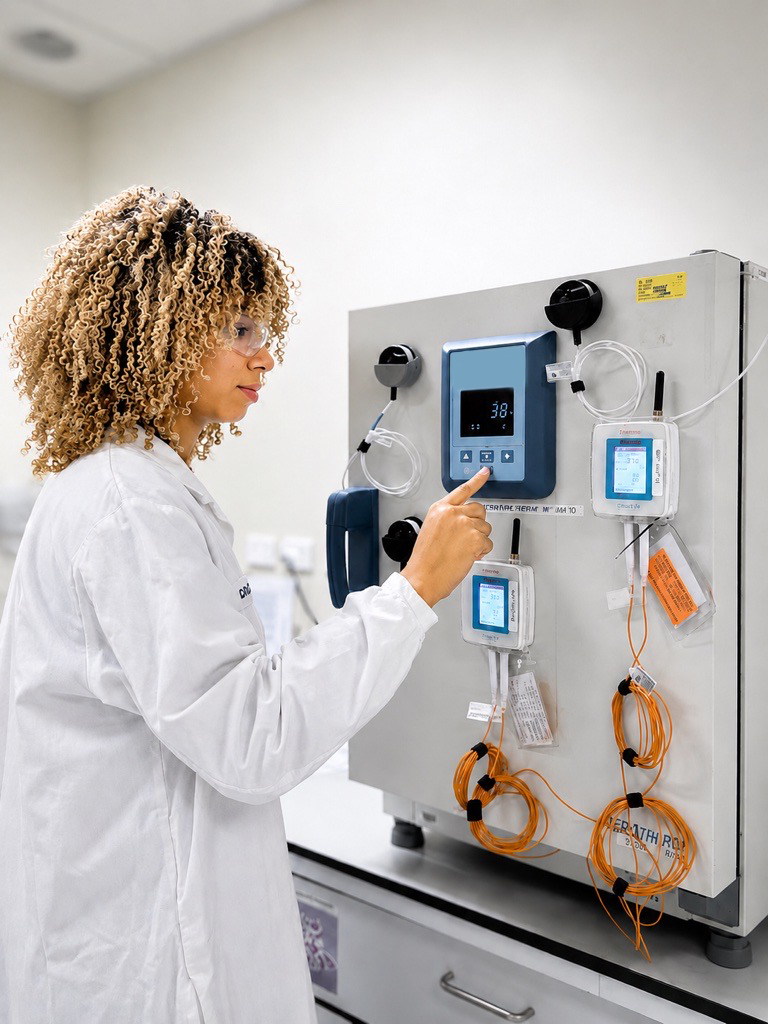
Low ambient warehouse temperatures can affect the compressor cycles of the cold storage units inside. This can cause them to run less efficiently or freeze up, threatening the stability of sensitive products.
Make Cold Weather Mapping Simple, Not Stressful
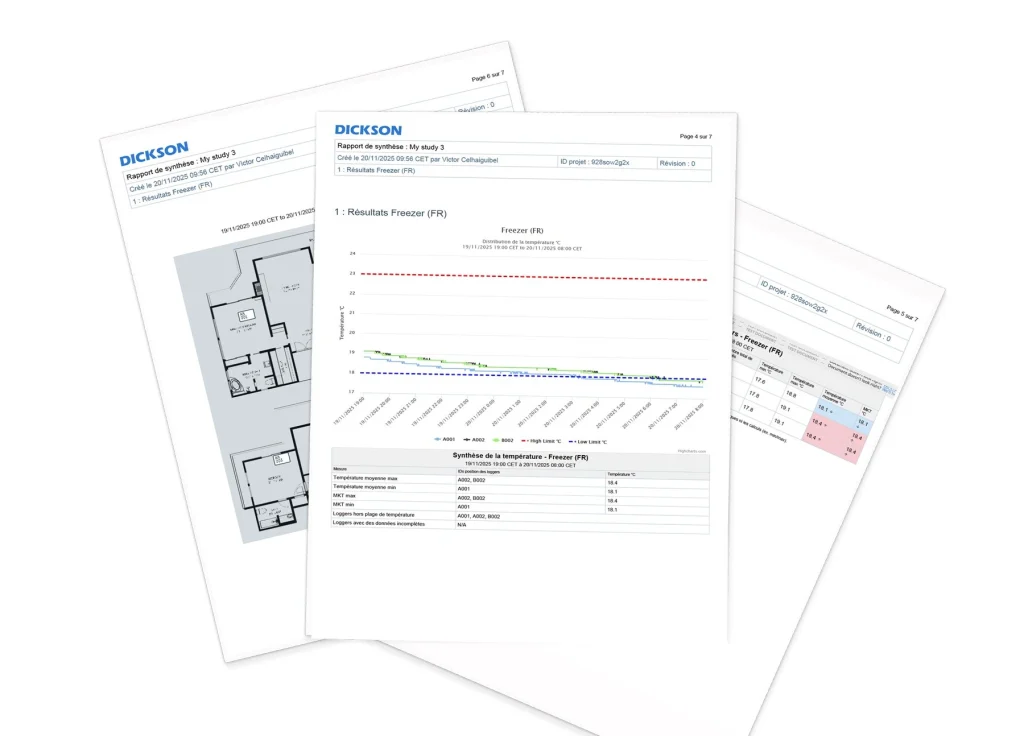
Cold weather mapping is often viewed as time-consuming and resource-intensive, requiring significant man-hours to set up and retrieve data loggers. However, validating your facility doesn’t have to be a drain on your team. With the Dickson Mapping Suite, you can automate device setup, data collection, and reporting workflows, turning a complex seasonal requirement into a simple, manageable task.
- Turnkey Setup: Digitally map your facility on a schematic using all-in-one, preconfigured kits that include calibrated sensors and gateways for a fast, plug-and-play deployment.
- Real-Time Visibility: Monitor conditions in real-time from any device to detect cold weather deviations immediately and reduce the risk of compromised results.
- Compliance Ready: Generate audit-ready, time-stamped reports compliant with FDA 21 CFR Part 11, EU Annex 11, and ALCOA data integrity standards.
- Streamlined Project Management: Centralize your study within one intuitive interface that automates data collection and reporting so your team can manage multiple locations and ensure a consistent, repeatable process.
Seasonal mapping isn’t just a box to check. It is how you prove your pharmaceutical storage control is robust year-round. Whether mapping a warehouse with our Ambient Kit or a freezer with our Ultra-Low Kit, our integrated suite helps you monitor temperature and environmental conditions with accuracy, consistency, and compliance in mind.
Contact Dickson today to learn more about our Mapping Suite so you know exactly what to expect when the temperature drops.
How to Place Data Loggers for Mapping Studies and 3 Ways Dickson Can Help
When it comes to temperature mapping, these two questions create the most confusion: how many loggers do I need, and where exactly should they go?…

How Compounding Pharmacies Can Build a Defensible Differential Pressure Monitoring Program
For years, differential pressure sat in the background of compounding pharmacy monitoring programs — tracked less consistently than temperature and humidity, and enforced less rigorously….
How Douglas Pharmaceuticals Strengthened Environmental Monitoring and Audit Readiness with OCEAView™
Faced with the need to modernise its environmental monitoring approach across two manufacturing sites, Douglas Pharmaceuticals turned to Dickson to deploy a compliant, centralised, and…

What to Look for in a GxP Metrology Partner for Pharmaceutical Manufacturing
In pharmaceutical manufacturing, there are moments that reveal whether your monitoring vendor is also a true GxP metrology partner. A temperature sensor found out of…
Ready to chat?
Talk To A Specialist
Our trained team of professionals is ready to help you through the compliance process from start to finish. Reach out today to start the conversation. Call +33 4 99 13 67 30 or send us a message.