


Answers to Common Temperature Sensor Questions
Maintaining the correct temperature is critical for protecting sensitive materials and ensuring quality standards. For industries like hospitals, pharmaceuticals, food storage, and manufacturing, temperature sensors provide crucial real-time data and alerts, helping teams keep environments within strict, required limits.
Many people have questions about temperature sensor usage, and Dickson experts are here to provide answers.
Generally speaking, temperature sensors are devices that measure the degree of hotness or coldness in an environment and convert this information into electronic data for monitoring, recording, or signaling temperature changes.
Temperature sensors operate by detecting changes in physical properties—such as resistance, voltage, or current—that vary with temperature. These variations are then converted into readable data, allowing for accurate temperature monitoring.
Common types of temperature sensors include:
A thermocouple sensor is made by joining two dissimilar metals. They generate a voltage proportional to temperature differences.
A resistance temperature detector (RTD) utilizes the principle that a metal’s resistance changes with temperature; platinum is commonly used for its stability.
A thermistor sensor is composed of ceramic or polymer materials. They exhibit significant resistance changes with temperature variations.
A semiconductor-based sensor integrates circuits that measure temperature by monitoring voltage changes across a diode.
Dickson offers a range of replaceable sensors designed for easy recalibration and maintenance. These sensors, such as the Ambient Temperature Sensor (RTMP) and the Temperature & Humidity Sensor (RTRH-R), can be swapped out without interrupting monitoring processes, ensuring continuous and accurate data collection.
Temperature sensors are utilized across various industries, including:
Pharmaceuticals: Monitoring storage conditions for assets such as drugs and vaccines.
Hospitals and Healthcare: Maintaining appropriate temperatures in medical equipment and patient care areas.
Third-Party Logistics: Ensuring the highest product quality and safety throughout the supply chain.
Food and Beverage: Ensuring proper storage and processing temperatures.
Manufacturing: Controlling processes that are temperature-sensitive.
Aerospace: Monitoring environmental conditions for equipment and materials.
Temperature range: Different sensors are designed for different temperature ranges.
Thermocouples cover a broader range, extending from -300°F to 2,000°F (-185°C to 1,093°C), with accuracy varying from +/-1.8°F (+/- 1.0°C) in low-range measurements to +/-3.8°F (+/- 2.1°C.) in high-range measurements.
Standard platinum RTDs cover a broad range of -200°C to 850°C. However, the specific temperature range of an RTD depends on the material, construction and intended application.
Some thermistors can measure a range from -58°F to 158°F (-50°C to 70°C) with an accuracy of +/-0.9°F from -58°F to 68°F (+/-0.5°C from -50°C to 20°C). Others can measure from -328°F to 1,112°F (-200°C to 600°C) with Class B accuracy.
Digital temperature sensors cover ranges from 67°F to 257°F (-55 °C to 125°C) with an accuracy of +/-0.9°F (+/-0.5 °C).
Accuracy: Determine the level of precision necessary for your application.
Thermocouples are effective for high temperatures from 248°F to 2012°F (120°C to 1100°C)
RTDs are well-suited for low temperatures from -321°F to -112°F (-196°C to -80°C)
Digital temperature sensors are ideal between -22°F and 230°F (-30°C and 110°C)
Thermistors are effective for measurements between -148°F and 572°F (-100°C and 300°C)
Response time: How quickly do you want your temperature sensor to react to temperature changes? Sensors for dynamic environments, such as refrigeration systems where doors are opened and closed regularly, require faster response times, while slower responses are acceptable for more stable, controlled settings.
Environment: Consider where you are placing the temperature sensor. Factors like chemical exposure and extreme temperatures can affect sensor performance. Ensure the sensor is rated for your environment’s conditions to avoid premature failure and inaccurate readings.
To maintain optimal temperature sensors performance, follow these guidelines:
Regularly calibrate your sensors for accuracy. In most cases, this should be performed at least once every year.
Handle sensors with care to prevent physical damage and exposure to harmful substances.
Protect sensors in harsh environments with appropriate enclosures.
Conduct routine inspections for signs of wear, corrosion, or damage.
To maintain precise sensor readings, regular calibration is essential as natural wear can degrade accuracy. While an annual calibration is generally recommended, the frequency should be tailored to your application, environmental conditions, and sensor quality. For precise guidance, refer to the manufacturer’s documentation or consult a calibration expert.
You can learn more about Dickson’s calibration services here.
Yes, our temperature sensors are compatible with Dickson’s cloud-based monitoring systems, enabling real-time data access and alerts. Pair the sensors with wireless data loggers and cloud software to monitor environmental conditions remotely. This integration allows for centralized data management, compliance reporting, and proactive issue detection, ideal for critical industries like healthcare and pharmaceuticals.
Our temperature sensors are designed for straightforward and easy installation and integration with monitoring systems. Simply connect the sensor to your device, configure the settings via our software, and begin tracking data. Detailed instructions and technical support are available to ensure a seamless setup, even for first-time users or complex monitoring environments.
To ensure you’ve selected the correct temperature sensor, check the specifications and compatibility details in your device’s user manual or on the product page. Look for matching model numbers, measurement ranges, and connector types. If you’re uncertain, contact customer support for guidance, providing your device’s model information to confirm compatibility.
You can explore our range of high-precision temperature sensors here. You can also browse our humidity and CO2 sensors for a more comprehensive environmental monitoring solution or contact a Dickson expert with any questions.

Humidity Sensor Questions and Answers
Answers to Common Humidity Sensor Questions Designed for real-time humidity monitoring, humidity sensors deliver accurate data to ensure that your specific environment stays within the…

USB Data Logger Questions and Answers
Need dependable temperature monitoring in locations where internet access may be limited? USB data loggers offer a reliable solution for on-site data retrieval and compliance….
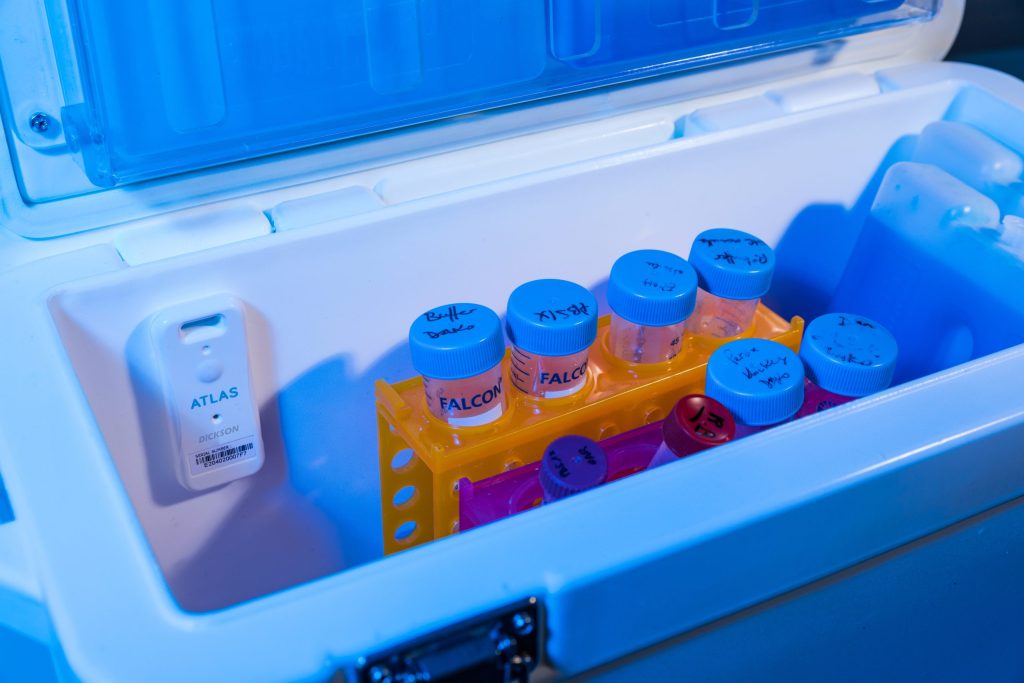
Temperature Sensor Questions and Answers
Answers to Common Temperature Sensor Questions Maintaining the correct temperature is critical for protecting sensitive materials and ensuring quality standards. For industries like hospitals, pharmaceuticals,…
Ready to chat?
Talk To A Specialist
Our trained team of professionals is ready to help you through the compliance process from start to finish. Reach out today to start the conversation. Call (630) 563-4209 or send us a message.