



Every vaccine dose in a refrigerated environment, whether destined for a pediatric office, a retail pharmacy, or a public health clinic, represents a patient counting on it to work.
Keeping it in the correct temperature range is a shared responsibility, because getting it wrong doesn’t just weaken a vaccine, it can turn it into one that harms the patient who receives it.
Freeze events are where that risk can do the most damage. Vaccines with aluminum-based adjuvants, including many hepatitis, pertussis, and DTaP formulations, lose potency permanently after a single exposure.
What an Environmental Monitoring System Needs to Catch
The World Health Organization (WHO) has called protecting vaccines from freeze damage “one of the most poorly addressed problems in vaccine management.” A commonly cited U.S. Vaccines for Children field study across 27 sites found temperature monitoring systems in place at the time caught only 1 of 66 documented freeze events over 24 weeks. In nearly every case, the temperature logs showed readings within range right up until the freeze indicator triggered, a sign that the devices in place weren’t capturing what the vaccines were actually experiencing.
This is exactly the gap a well-designed monitoring program is built to close: continuous sampling instead of periodic checks, and real-time alerts that reach staff right when conditions drift. The goal is to ensure a freeze event gets caught the moment it happens rather than discovered after doses are already compromised.

Continuous Vaccine Monitoring Reduces Patient Risk
A widely cited study of 243 digital data loggers found that recording twice-daily checks without min/max readings caught only 4.8% to 6.4% of total excursions.
To prevent this type of oversight, Pharmaceutical Inspection Co-operation Scheme, GDP and WHO guidelines call for continuous, real-time temperature monitoring rather than manual periodic checks so that deviations trigger an alert immediately.
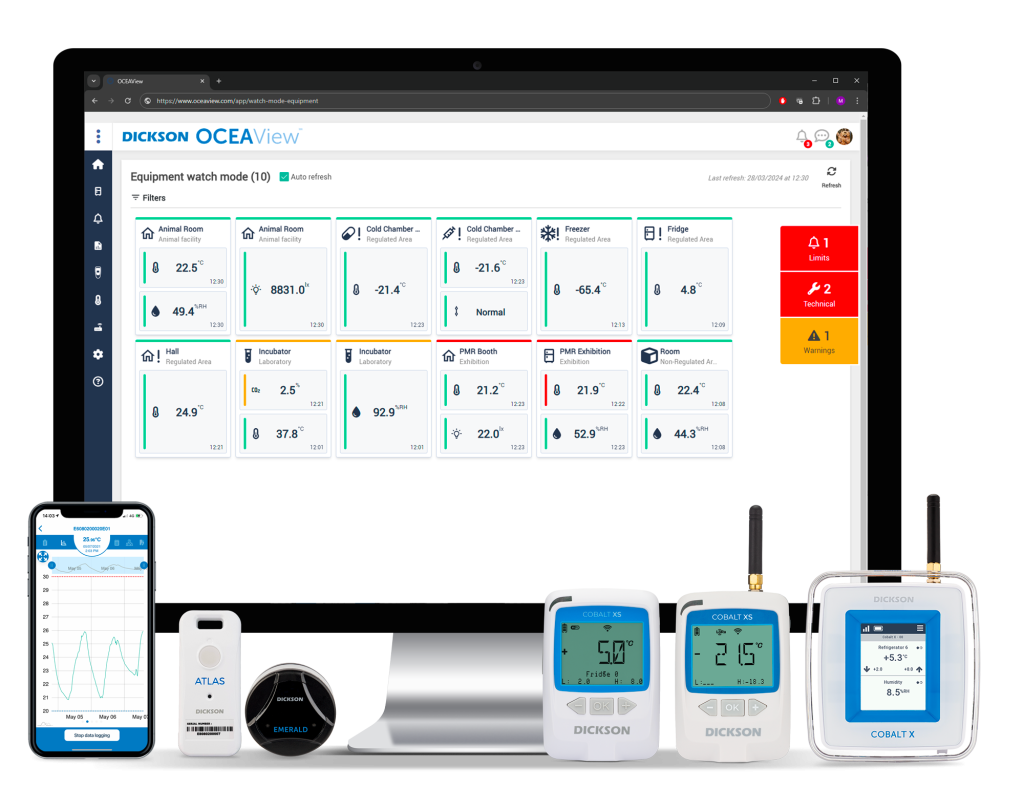
Here are some other ways a continuous temperature monitoring system, such as Dickson’s OCEAView™ Cloud or On-Premise, helps to reduce the risk and severity of excursions:
- Live visibility into every storage unit, with alerts that reach the right person the moment a reading moves out of range
- Custom alarm thresholds and severity levels, so a minor drift and a full excursion trigger different responses instead of the same alarm
- Multi-channel alerts by SMS, phone, and email, plus audible alarms, so a notification doesn’t depend on one person seeing one screen
- Alert rules applied across multiple units at once, keeping response consistent whether it’s one refrigerator or twenty
- A single dashboard across every refrigerator, freezer, and ultra-cold unit, even across multiple facility locations, connected over LoRaWAN
Keep Up with Sensor Calibration to Maintain Accuracy
A monitoring system is only as good as the accuracy of what it’s measuring.
WHO guidance calls for sensor accuracy of ±0.5°C or better, using calibrated equipment placed according to mapping results. A buffered temperature probe — one immersed in glycol or a similar material — is a widely recommended way to meet that accuracy standard in practice, since it reflects actual vaccine temperature far more closely than a probe measuring air alone.
Storage unit grade matters here too.
A household-grade combination refrigerator/freezer spends roughly 10 times more of the year outside the safe temperature range than a purpose-built unit does. That’s about four days a year versus less than half a day. An accurate sensor on an unstable refrigerator still catches those excursions, it just has more of them to catch, requiring more interventions for staff to address.
Dickson’s calibration lab is accredited to ISO/IEC 17025, and Dickson’s temperature sensors support buffered probe configurations built for this exact use case.
What the Record Needs to Prove After an Excursion
What happens after an excursion determines whether a patient is protected. The affected vaccines get labeled “do not use” immediately, as a first step, regardless of how the excursion is ultimately resolved. What happens after that depends on the record. Contacting the manufacturer or immunization program for a usability determination means having three things ready:
- Exact duration and peak temperature of the excursion
- Which doses were actually in the unit during that window, so only those need quarantining
- Whether it’s a one-time event or part of a longer drift
Those specifics are what actually shape the manufacturer’s or immunization program’s decision, not just the fact that an alarm went off. Good records don’t skip a step in the process, they make the outcome accurate instead of a guess.
Automated Documentation Frees Staff to Focus on the Response
That’s a lot to manage in the middle of a shift: pulling doses, documenting exact timing, tracking down manufacturer guidance, all while pharmacy and nursing staff are trying to keep the rest of the unit running.
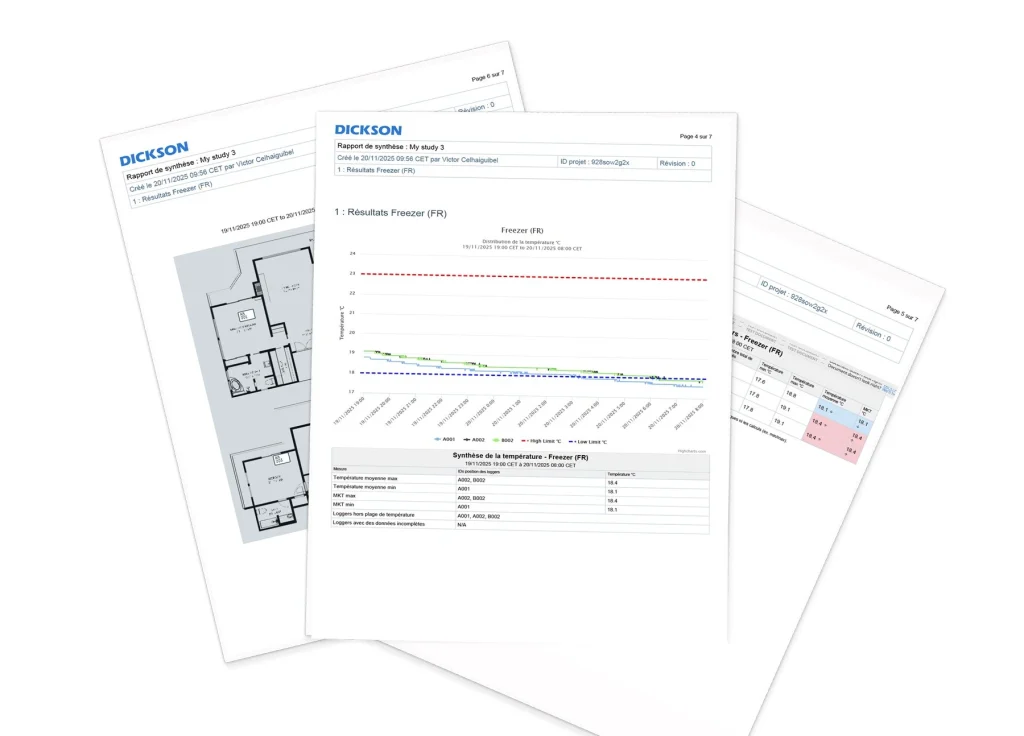
Dickson’s monitoring platforms keep a documented history of every excursion and its corrective action automatically, so staff can focus on the response itself instead of reconstructing the paperwork afterward, and that history becomes part of the audit-ready record.
Vaccine Monitoring Checklist
Use this checklist as a routine reference, not just for an audit, but as part of regular program upkeep.
Continuous Electronic Monitoring
- A Temperature Data Logger is in place on every storage unit, recording at least every 30 minutes.
- Alerts are set up to reach the vaccine coordinator or a designated backup immediately.
- A backup temperature monitoring device is available in case the primary one fails.
Calibrated, Traceable Sensors
- Every device has a current, valid Certificate of Calibration Testing on file.
- The certificate confirms accuracy of ±0.5°C or better and traceability to national or international measurement standards.
- Devices use a buffered probe, so readings reflect actual vaccine temperature rather than air temperature alone.
- Calibration is renewed every year or per the manufacturer’s recommended timeline.
Validated, Audit-Ready Recordkeeping
- Temperature data is retained per requirements set by your national or local immunization program or regulatory authority.
- Records are attributable, legible, contemporaneous, original, and accurate (ALCOA+).
- Reports include a complete audit trail, consistent with EU GMP Annex 11 where applicable.
- Data is reviewed weekly for trends, not just checked in the moment of an alert.
Practised Excursion Response
- A written SOP exists for temperature excursions, and staff have been trained on it.
- Staff know to quarantine affected vaccines and label them clearly.
- Contact information for the relevant national immunization program and vaccine manufacturers is current and accessible.
- The SOP has been rehearsed, not just filed away.
Additional Resources
4 Questions that Reveal Whether Your Vaccine Monitoring Is Audit Ready
Frequently Asked Questions
Is a household refrigerator-freezer combo safe for vaccine storage?
Not recommended. A household-grade unit spends significantly more of the year outside the safe temperature range than a purpose-built unit, and combination units in particular create cold spots that put vaccines at freeze risk.
How do I know if my digital data logger is properly calibrated?
Check its Certificate of Calibration Testing for the model and serial number, calibration date, confirmation that it passed testing, and an accuracy of ±0.5°C or better. The certificate should also show that testing conforms to ISO/IEC 17025 standards and is traceable to recognised national or international measurement standards.
Is checking my vaccine storage twice a day enough?
Twice-daily manual checks fall short of WHO guidance, which calls for continuous monitoring rather than periodic spot checks. That’s the reasoning behind the recommendation for a digital data logger that records at least every 30 minutes.
Will my temperature records hold up if I’m audited or inspected?
Only if they’re attributable, legible, contemporaneous, original, and accurate — the ALCOA+ standard — with a documented audit trail behind every entry. Records that are accurate but can’t show who recorded them, when, and under what conditions typically don’t hold up under review.
What should I do if my team experiences a temperature excursion?
Label the affected vaccines “do not use” and set them aside — don’t discard them. Document the date, time, and duration of the excursion, then contact your national immunisation programme, regulatory authority, or the vaccine manufacturer before deciding whether the doses are still usable or patients need to be contacted for revaccination.
What Is OPC UA, and Why Does It Matter for Regulated Industries?
If you work anywhere near a plant floor, a cleanroom, or a hospital facilities team, you’ve probably heard the term OPC UA, usually in the…
How to Place Data Loggers for Mapping Studies and 3 Ways Dickson Can Help
When it comes to temperature mapping, these two questions create the most confusion: how many loggers do I need, and where exactly should they go?…
How Compounding Pharmacies Can Build a Defensible Differential Pressure Monitoring Program
For years, differential pressure sat in the background of compounding pharmacy monitoring programs — tracked less consistently than temperature and humidity, and enforced less rigorously….
How Douglas Pharmaceuticals Strengthened Environmental Monitoring and Audit Readiness with OCEAView™
Faced with the need to modernise its environmental monitoring approach across two manufacturing sites, Douglas Pharmaceuticals turned to Dickson to deploy a compliant, centralised, and…
Ready to chat?
Talk To A Specialist
Our trained team of professionals is ready to help you through the compliance process from start to finish. Reach out today to start the conversation. Call +603 749 40758 or send us a message.