



Most pharmacy and healthcare clinic vaccine storage programs are doing the right things. The challenge is proving it as efficiently as possible.
An inspector arriving at your facility checks both the temperature logs and the integrity of the entire cold chain audit trail producing them.
World Health Organization Annex 9 and national regulatory frameworks across the Asia-Pacific (APAC) region define the essential features inspectors are trained to verify. Use the 4 questions below to assess whether your vaccine monitoring system holds up to that scrutiny.

1. Does Your Data Logger Have These 3 Critical Features?
WHO Annex 9 and APAC national regulatory frameworks specify that a compliant digital data logger (DDL) must include three essential features:
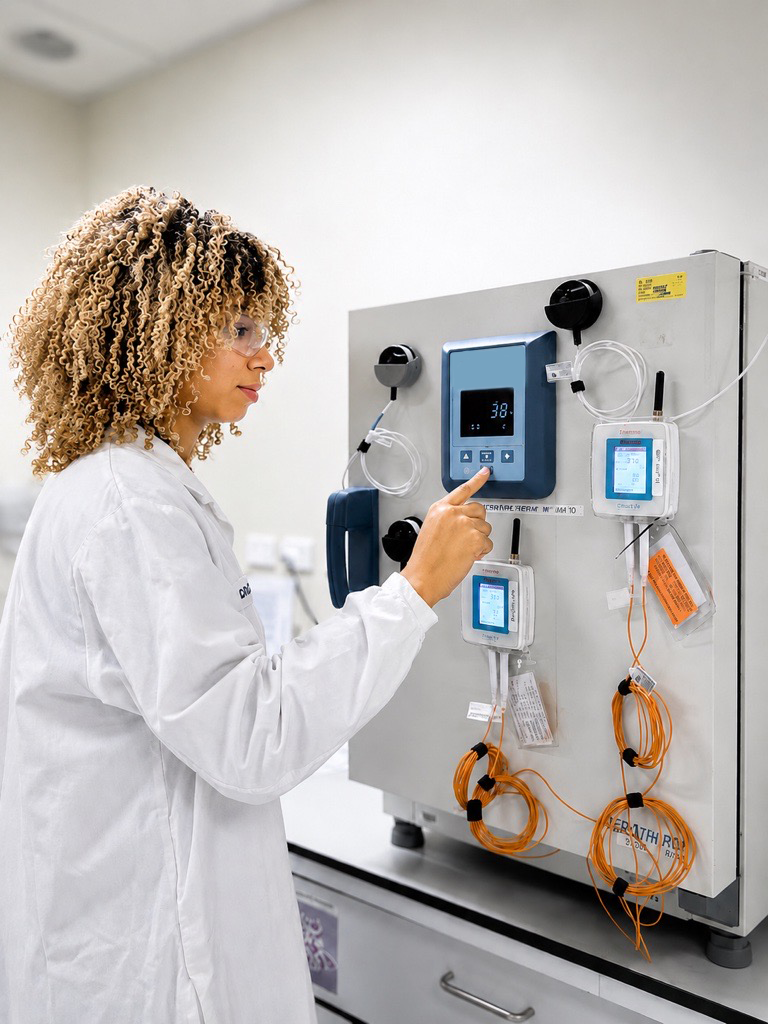
- Buffered temperature probe or sensor: designed or buffered to measure the actual temperature of the pharmaceutical product rather than the surrounding air. When a refrigerator door opens, air temperature fluctuates immediately. A buffered probe does not, which prevents false alarms and provides accurate product data for excursion investigations.
- Low-battery indicator: because even a brief gap in monitoring data can raise questions during an inspection. A timely warning gives staff the chance to replace the battery before the device goes dark.
- Local visual and audible alarms: to ensure staff are alerted when temperature sensor readings drift outside the 2–8°C safe range for refrigerated vaccines. Without a local alarm, an overnight excursion may go undetected until the next workday. Many healthcare facilities now extend this capability with email and text alerts through a cloud-connected monitoring platform to ensure the right staff are notified immediately, whether physically on-site or working remotely.
2. Can You Prove the Exact Duration of an Excursion?
WHO Annex 9 specifies a minimum recording frequency of six times per hour (every 10 minutes) for each sensor position monitoring refrigerators and freezers. Australia’s National Vaccine Storage Guidelines go further, recommending data logging at 5-minute intervals as best practice for point-of-care storage. That cadence is what makes a real excursion investigation possible.
To ensure your temperature monitoring system is fully prepared, it should provide the following capabilities:
Optimized Logging Intervals: Configure your DDL to match the most stringent standard that applies to your facility, whether that’s WHO Annex 9’s 10-minute floor or a tighter interval for higher-risk environments.
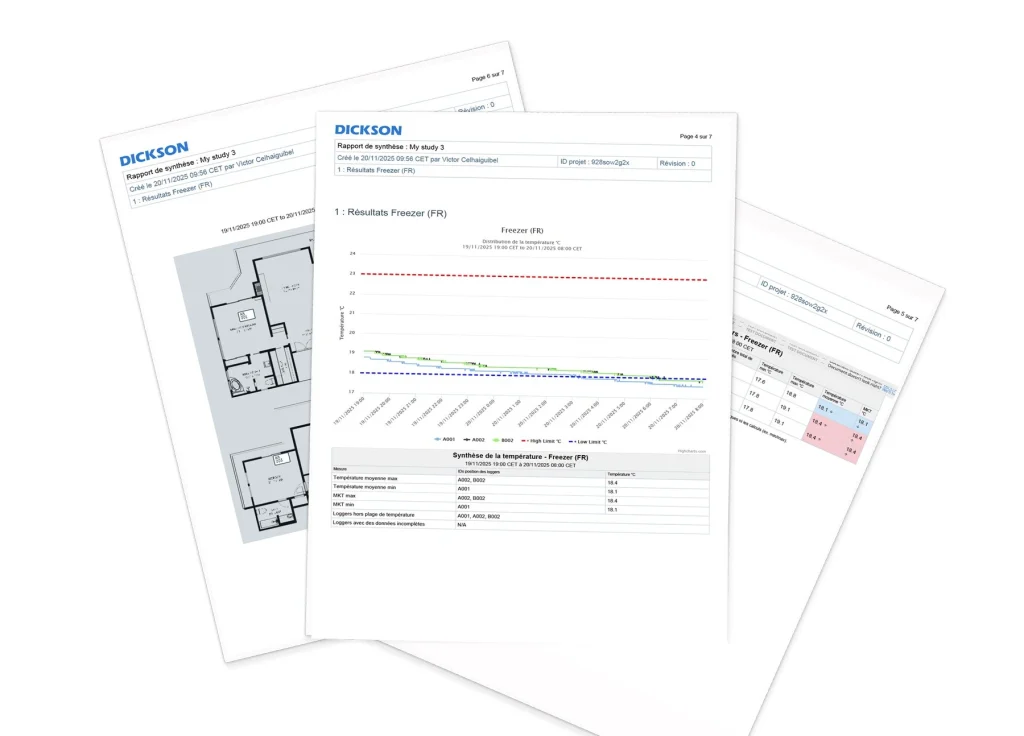
Automated Excursion Reports: Advanced systems automatically generate time-stamped, unalterable reports detailing the exact moment a unit went out of range and recovered, giving inspectors a complete documentation trail.
3. How Much Data Can Your Logger Store?
Temperature and humidity data loggers must retain sufficient records to support a full audit trail. WHO Annex 9 and national GDP frameworks across the APAC region require that monitoring records remain secure, retrievable, and available for inspection throughout the required retention period.
As a practical benchmark, a logger storing at least 4,000 readings provides approximately 83 days of continuous coverage at 30-minute intervals (roughly 27 days at the WHO Annex 9 recommended 10-minute interval and 13 days at Australia’s 5-minute standard).
For maximum security, look for temperature monitoring solutions that automatically sync data to a secure off-site server, significantly limiting the risk of lost records and supporting the data integrity requirements enforced by regulators including Australia’s Therapeutic Goods Administration (TGA), Japan’s Pharmaceuticals and Medical Devices Agency (PMDA), and WHO-aligned national authorities across the broader region.
4. Can You Verify Calibration to ±0.5°C?
A valid Certificate of Calibration is mandatory to prove your data is accurate.
Across the APAC region, calibration is generally expected to be traceable to national or international measurement standards.
This is best demonstrated through a certificate issued by laboratories accredited by your country’s national accreditation body, such as the National Association of Testing Authorities (NATA) in Australia, International Accreditation Japan, or the Singapore Accreditation Council (SAC), whose certificates are mutually recognized across International Laboratory Accreditation Cooperation (ILAC) Mutual Recognition Arrangement signatory nations.
The certificate should confirm device accuracy within ±0.5°C, which is the threshold explicitly specified by WHO Annex 9 and the benchmark that most APAC national regulatory frameworks reference.
Because certificates typically expire after one to two years, traditional calibration often requires mailing your entire device to a lab—leaving your unit unmonitored or forcing you to juggle temporary backup loggers.
Top-tier monitoring systems solve this with plug-and-play replaceable sensors. Your staff can simply swap a freshly calibrated sensor for the expiring one in seconds, maintaining continuous compliance with zero gaps in your data and zero equipment downtime.
Simplifying Audit Preparation with the Right Vaccine Monitoring System
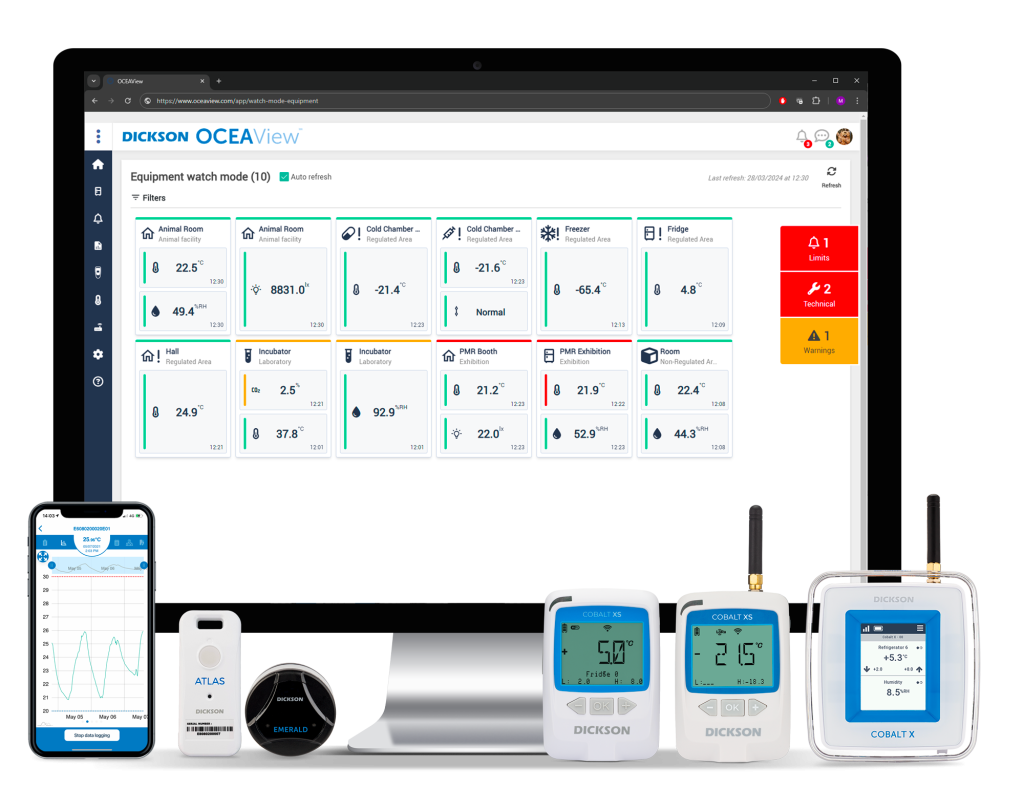
Meeting these standards shouldn’t overwhelm your clinical team. Dickson’s OCEAView™ Cloud or On-Premise environmental monitoring systems are designed to meet every item on this list: automated reporting, smart alarms, replaceable sensors, and full compliance with WHO Annex 9 and applicable national GDP frameworks built in.
Whether you are upgrading an existing setup or building a new monitoring program from scratch, contact a Dickson expert to see how OCEAView™ makes audit-readiness straightforward.
What Is OPC UA, and Why Does It Matter for Regulated Industries?
If you work anywhere near a plant floor, a cleanroom, or a hospital facilities team, you’ve probably heard the term OPC UA, usually in the…
How to Place Data Loggers for Mapping Studies and 3 Ways Dickson Can Help
When it comes to temperature mapping, these two questions create the most confusion: how many loggers do I need, and where exactly should they go?…
How Compounding Pharmacies Can Build a Defensible Differential Pressure Monitoring Program
For years, differential pressure sat in the background of compounding pharmacy monitoring programs — tracked less consistently than temperature and humidity, and enforced less rigorously….
How Douglas Pharmaceuticals Strengthened Environmental Monitoring and Audit Readiness with OCEAView™
Faced with the need to modernise its environmental monitoring approach across two manufacturing sites, Douglas Pharmaceuticals turned to Dickson to deploy a compliant, centralised, and…
Ready to chat?
Talk To A Specialist
Our trained team of professionals is ready to help you through the compliance process from start to finish. Reach out today to start the conversation. Call +603 749 40758 or send us a message.