



In pharmaceutical manufacturing, your environmental monitoring system is your first line of defense in protecting product quality and patient safety. But simply having one in place isn’t enough. The real question is: Does your system truly meet the FDA’s stringent requirements for environmental monitoring compliance?
To ensure you are audit-ready, you need to verify that your system supports your compliance goals rather than complicating them. This guide walks you through the five critical questions you need to ask to verify your system is FDA-compliant.
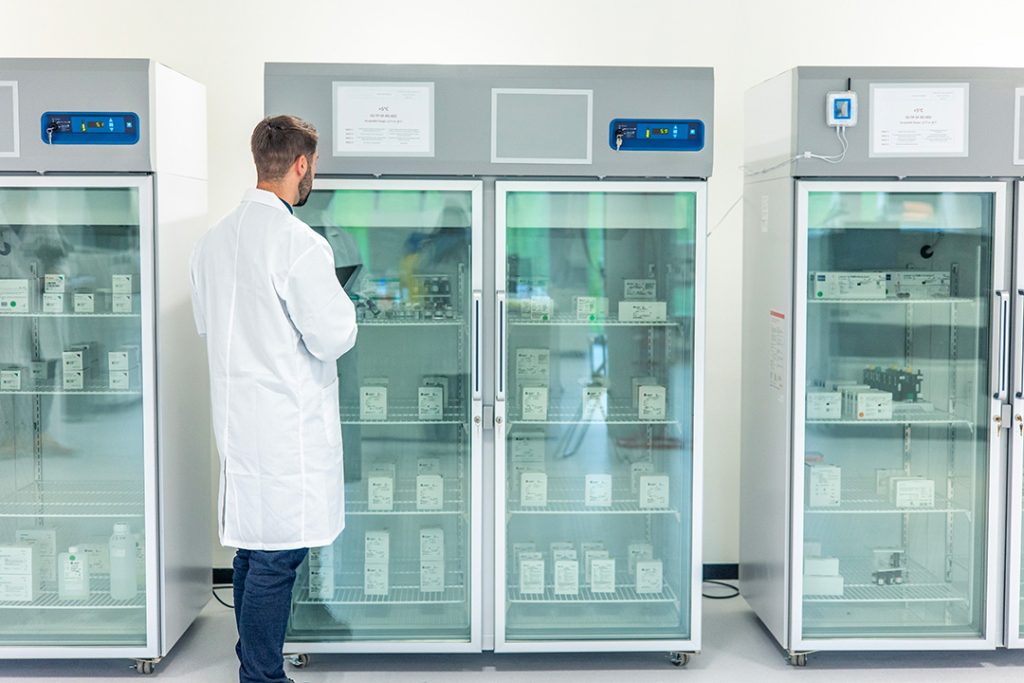
1. Does the Monitoring System Support a Proactive Risk-Based Program?
FDA compliance expects a documented, risk-based program that explains why you monitor specific locations, not just that you monitor them.
Can you justify why you monitor each specific location?
Your Standard Operating Procedures (SOPs) must define the rationale for pharmaceutical storage control in specific locations, such as a freezer or warehouse zone. Your system should help you document and manage this justification.
Is your sensor placement based on a formal risk assessment?
A risk assessment helps you identify which areas pose the greatest threat to your product. For example, a -80°C freezer requires different controls than an ambient corridor, and your monitoring system should make it easy to implement a warehouse mapping plan that reflects this.
Can you configure your own excursion alerts?
A compliant system must allow you to set specific alert levels (early warnings) and action levels (critical limits) for every parameter. This ensures you can proactively respond to excursions before they impact product quality.
2. Is Your System Fully Validated and Qualified?
The FDA requires proof that your equipment is suitable for its intended use. Meeting this requirement demands more than just installing high-quality hardware; it requires a formal qualification process. You need a complete validation package (IQ, OQ, PQ) to prove to auditors that your system is installed correctly and performs reliably.
Installation Qualification (IQ):
Proves the system is installed correctly. This phase documents that all hardware and software components have been delivered and installed according to the manufacturer’s specifications and your specific design requirements.
Operational Qualification (OQ):
Proves the system functions as intended. This involves testing alarms, confirming the audit trail captures present and non-modifiable data, and checking user authentication and security controls. This phase ensures the system operates correctly under both normal and stressed conditions before going live.
Performance Qualification (PQ):
Proves the system works reliably in your specific environment. This final step confirms that the system maintains compliance and accuracy over a set period while running in your actual facility with real-world conditions.
This validation process ensures you satisfy key regulations, such as 21 CFR 211.63 (appropriate design) and 21 CFR 211.68 (assuring proper performance).

3. Does Your System Comply With 21 CFR Part 11?
Your system must comply with 21 CFR Part 11 to ensure your electronic records are trustworthy.
Data Protection:
How does the system protect your data from being lost? Look for features that support data backup and retrieval to satisfy 21 CFR 11.10(c).
Secure Access Controls:
Can you assign specific roles and permissions? This limits system access to authorized individuals as required by 21 CFR 11.10(d).
Unalterable Audit Trails:
Does the system automatically track every single action—including logins, changes, and acknowledgments—in an unalterable log? This is a direct requirement of 21 CFR 11.10(e).
4. Can Your System Prove Your Measurements Are Accurate?
To guarantee data integrity and satisfy FDA requirements, you must be able to prove that every measurement is accurate with a documented, validated history.
Accredited Calibration:
Are your temperature and humidity sensors calibrated by a lab accredited to ISO/IEC 17025 ? To prevent unnoticed excursions and corrective actions, you need traceability to international standards validated by a recognized body, such as the COFRAC.
GMP Requirements:
Your calibration process must satisfy the cGMP rules in 21 CFR 211.68(a) and 21 CFR 211.160(b)(4), which mandate routine calibration of all instruments, including every temperature sensor and data logger.
5. Does the System Support Your Entire Quality Process?
A compliant system supports the entire quality process, from providing data for batch records, cleanroom environmental monitoring and pharmaceutical storage control.
Flagging Excursions: The system’s immediate alarm notifications are the first step in the deviation investigation process required by 21 CFR 211.192.
Batch Records: Can the system automate reporting? This is crucial for completing batch records as mandated by 21 CFR 211.188.
Lifecycle Monitoring: Compliance doesn’t stop at the lab door. To meet 21 CFR 211.142(b), your system must monitor warehousing conditions—specifically temperature and humidity—to guarantee that the drug’s purity and strength remain unaffected during storage. This monitoring capability must extend to all GMP areas, including stability chambers (21 CFR 211.166), to ensure total lifecycle control.
Take the Guesswork Out of FDA Compliance
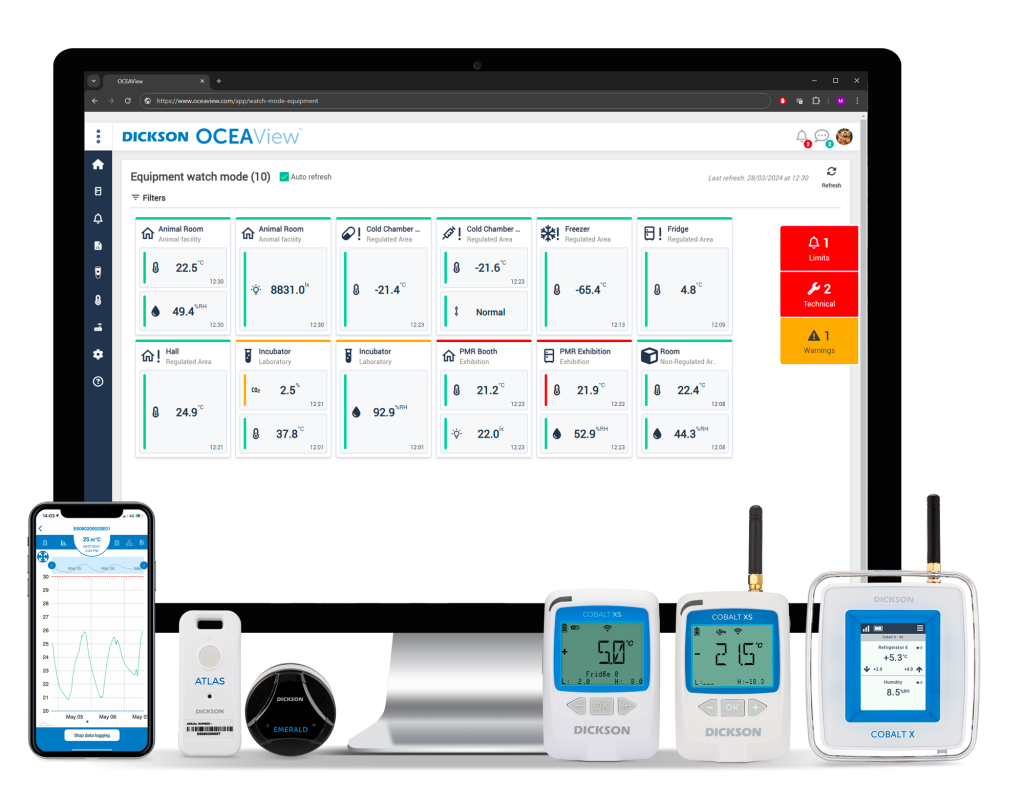
Given the intense resources required by 21 CFR Part 11, it’s critical to use a system developed specifically to align with these guidelines, such as OCEAView Cloud or OCEAView On-Premises. It saves your team from the heavy lifting of compliance by offering validation-friendly architecture for audit trails and access controls, ensuring you are audit-ready without sacrificing operational efficiency.
But choosing the right software is just the first step. Successful monitoring also requires navigating technical risks, such as data redundancies during outages and the potential consequences of record-keeping gaps.
This is where an expert partner becomes vital. While the need for FDA compatibility is clear, the technical execution is complex. An experienced environmental monitoring supplier with deep knowledge of FDA requirements and installation best practices, such as Dickson, can educate pharma manufacturers about avoidable pitfalls.
We have a lot of experience helping pharmaceutical manufacturers to be fully compliant and audit-ready. Contact a Dickson expert if you want to learn more.
What Is OPC UA, and Why Does It Matter for Regulated Industries?
If you work anywhere near a plant floor, a cleanroom, or a hospital facilities team, you’ve probably heard the term OPC UA, usually in the…
How to Place Data Loggers for Mapping Studies and 3 Ways Dickson Can Help
When it comes to temperature mapping, these two questions create the most confusion: how many loggers do I need, and where exactly should they go?…
How Compounding Pharmacies Can Build a Defensible Differential Pressure Monitoring Program
For years, differential pressure sat in the background of compounding pharmacy monitoring programs — tracked less consistently than temperature and humidity, and enforced less rigorously….
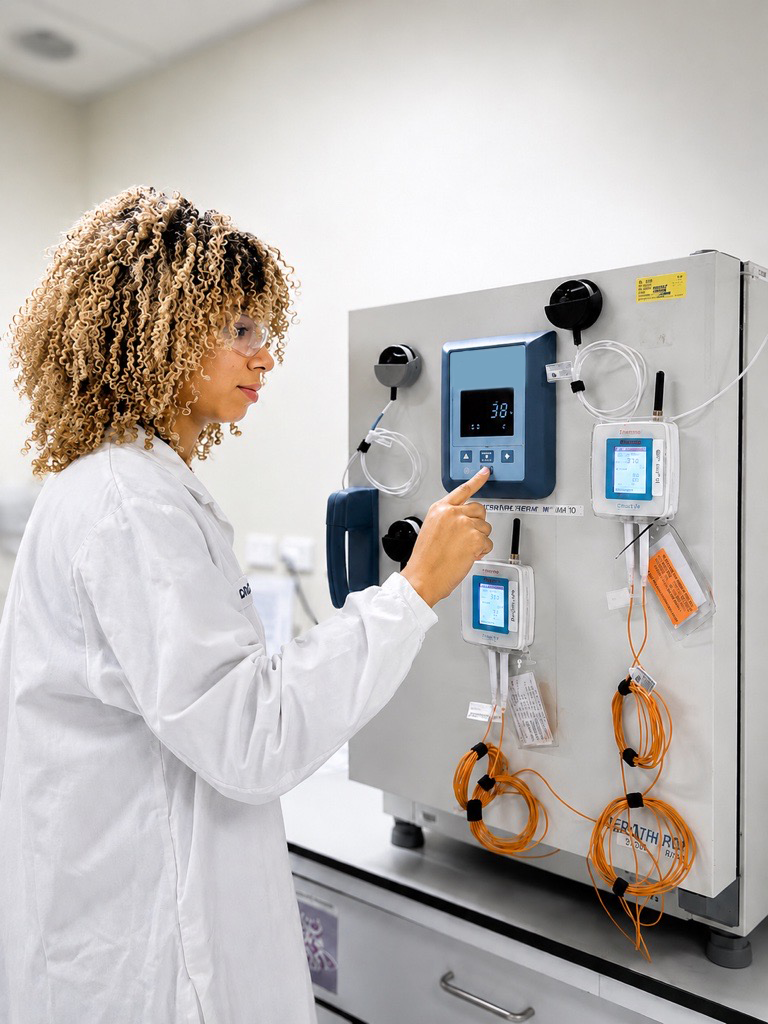
How Douglas Pharmaceuticals Strengthened Environmental Monitoring and Audit Readiness with OCEAView™
Faced with the need to modernise its environmental monitoring approach across two manufacturing sites, Douglas Pharmaceuticals turned to Dickson to deploy a compliant, centralised, and…
Ready to chat?
Talk To A Specialist
Our trained team of professionals is ready to help you through the compliance process from start to finish. Reach out today to start the conversation. Call +603 749 40758 or send us a message.